Someshwar & Ramling Temples,...
Satara's Five-Jyotirling Heritage Temple Complex
Find here
How to
Reach
Gursale is accessible by motorable road, with private vehicles and state buses reaching directly to each shrine; the terrain is gentle, and all temples are easily accessible
Best Time to
Visit
The best months to visit are October to March, when the landscape is lush and weather ideal for exploration. Festivals like Maha Shivratri, Shravan, Makar Sankranti, and Shravan Month is best to experience traditions and local culture
How Much Time Do You Need?
About Someshwar & Ramling Temples, Gursale
Gursale, situated near Bhushangad in Khatau Taluka, is renowned for its unprecedented five Jyotirlingas: Someshwar, Guptling, Ramling, Bhavling, and Shivling. The Someshwar and Ramling temples are the complex’s most significant and architecturally impressive attractions, while the remaining shrines are smaller yet revered by locals and pilgrims alike. Archaeological study reveals that Gursale’s temple heritage traces back to the eras of the Chalukyas and Shilaharas, evidenced by ancient sculptures and over fifty hero stones embellished throughout the campus.
At the heart of it lies the Someshwar Temple, built in distinctive Hemadpanti style, situated atop a one-meter-high stone platform. The structure has seen several restorations, reflecting a fusion of the ancient and the later. Statues of Sant Tukaram Maharaj and Samarth Ramdas Swami welcome visitors at the entrance. Within, a brass-clad stone Nandi leads to two assembly halls—the inner of which is semicircular and carved from solid stone. The sanctum’s ornately decorated door frame opens to a main Shivalinga, nearly a meter tall, with a brass Mahadev idol standing behind. Below the central sabhamandap lies the Guptling, a secret linga visible only through a narrow aperture and venerated daily along with the main idol. Thus, the Someshwar Temple alone houses two of the village’s five Jyotirlingas.
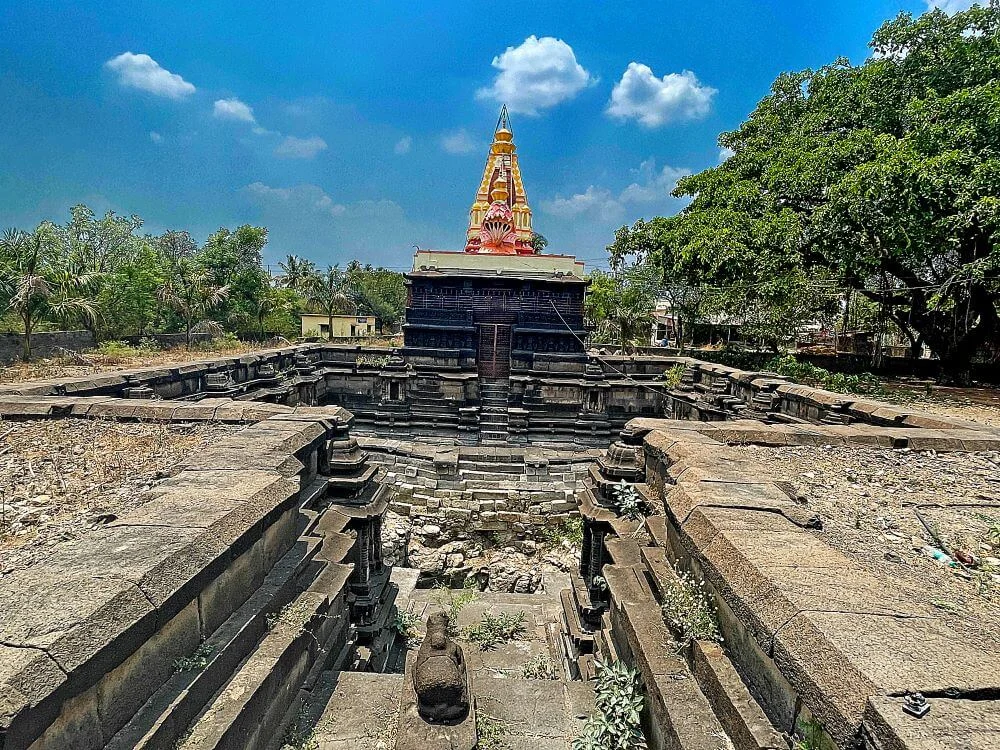
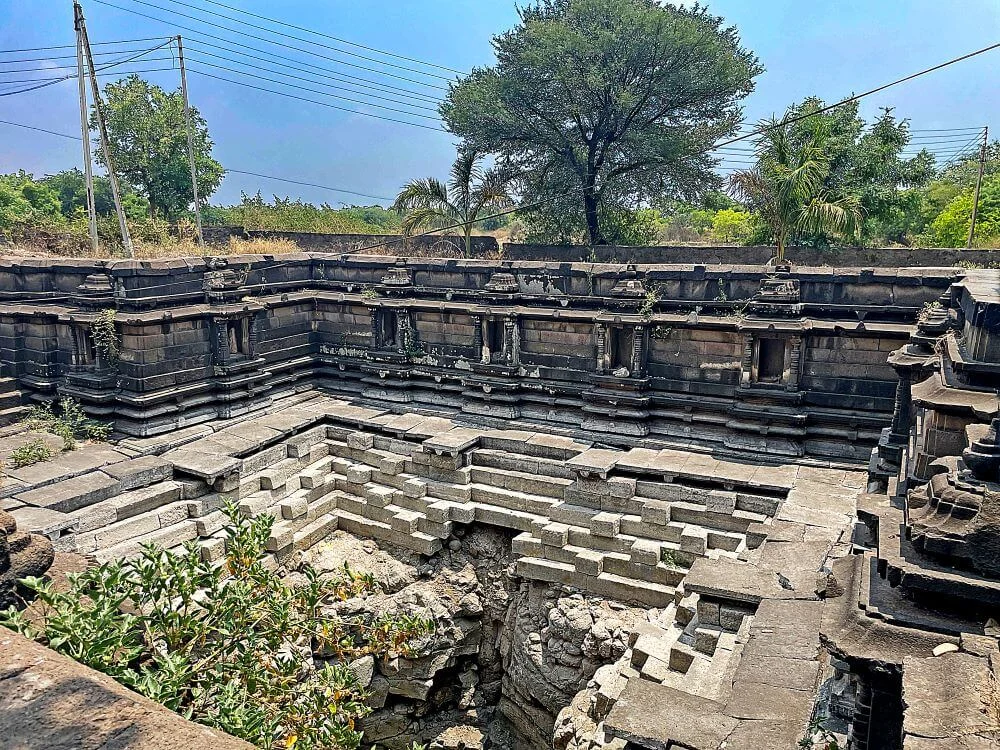
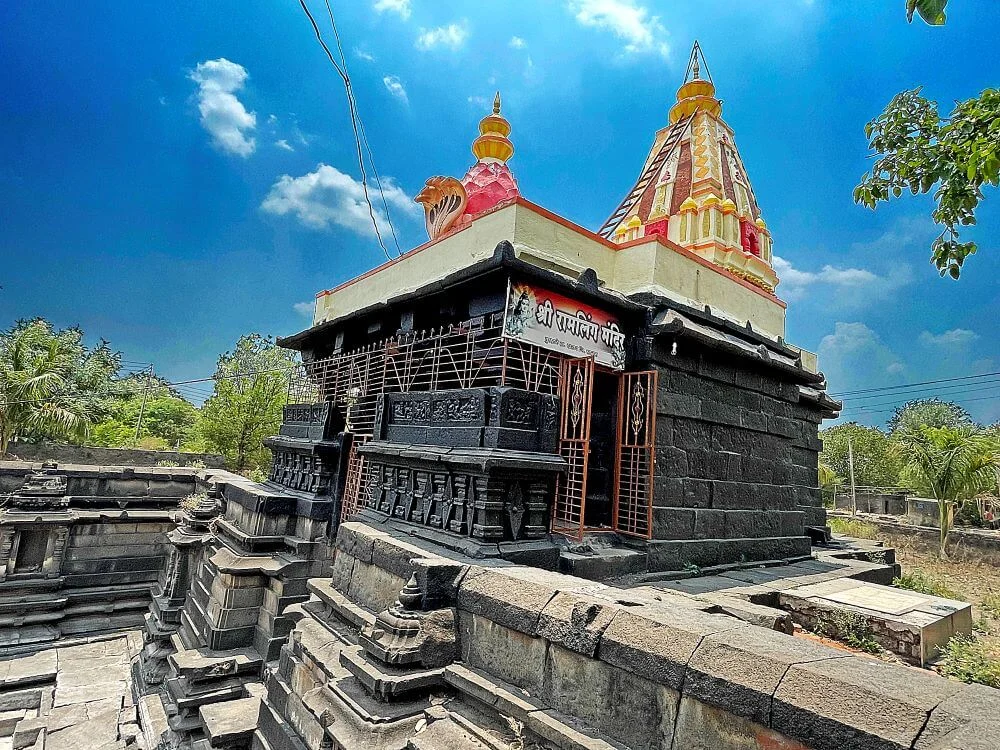
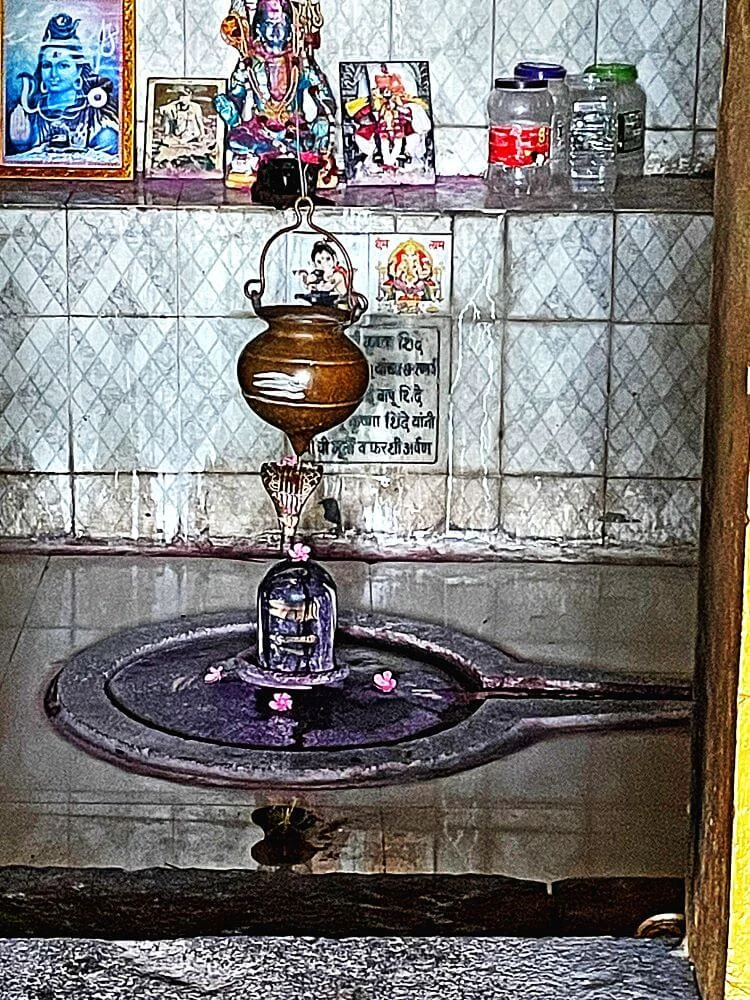
The Ramling Temple, likely dating from the 13th century, is another marvel boasting a unique square well with steps on all four sides and twelve exquisitely carved niches—one of which preserves an original idol of Bhairava. The temple is richly adorned with erotic and narrative sculptures; inside, monuments and pillars are extensively decorated, and the right wall features a striking relief of reclining Vishnu accompanied by Garuda and Brahma atop a lotus. The sanctum holds its own Jyotirlinga, adding to the spiritual landscape of the village.
Other significant sites include the Bhavling shrine, perched on a hill, home to a massive seven-meter-tall Shiva statue displaying a rudraksha mala and trident. A local legend relates that a stone once stuck in a cow’s hoof grew so large that only an installed idol of Shiva could curb its height—and now it grows sideways! The Shivling Temple, set in the open nearby, holds the last of the five Jyotirlingas and is celebrated each Shravan Monday during a village palanquin procession and special recitations.
Someshwar Gursale’s vibrant festivals define the temple’s cultural rhythm: the grand yatra on the first Shravan Monday, the Maha Shivaratri celebrations, and a colorful rathotsava during Magh—all marked by processions, palanquins, vows, and communal prasad. The entire campus is a living museum of sacred art, narrative stonework, and living faith connecting generations of devotees to Satara’s spiritual heart
This Website is developed by

Aseemit Services & Solutions
Contact : +91 7219259149
Nearby Facilities for Visitors
-
Bus Stop :
Gursale -
Railway Station :
Satara -
Airport :
Pune
-
Mechanic :
Khatau -
Petrol Pump :
Khatav -
Medical Help :
Khatav