Krishnamai Temple, Karad
Goddess Shrine at Krishna–Koyna Preeti Sangam
Find here
How to
Reach
Located just 2 km from Karad bus station, the temple is easily accessible by road. State transport buses and private vehicles can reach directly, with parking available at the site
Best Time to
Visit
The best months to visit are October to March, when weather is pleasant. The temple is especially vibrant with festivities during Shravan, Chaitra and Kartik Pournima
How Much Time Do You Need?
About Krishnamai Temple, Karad
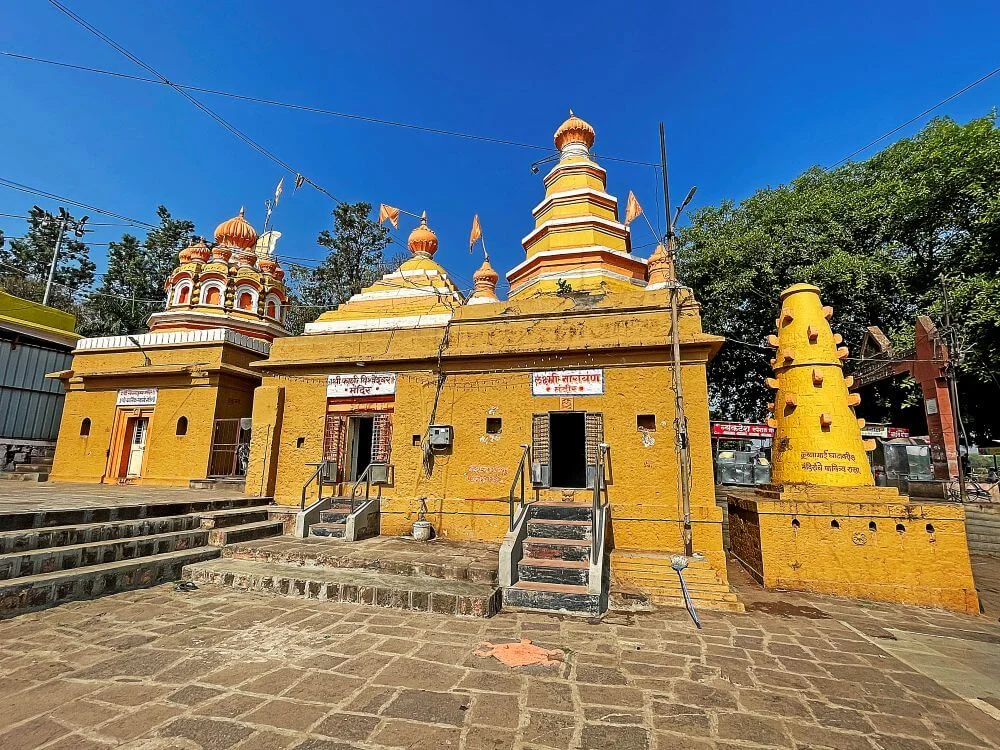
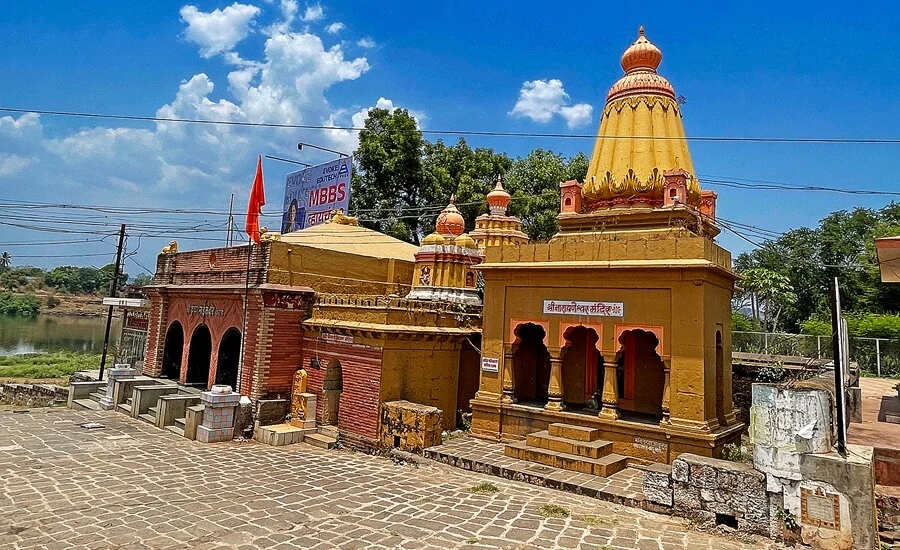
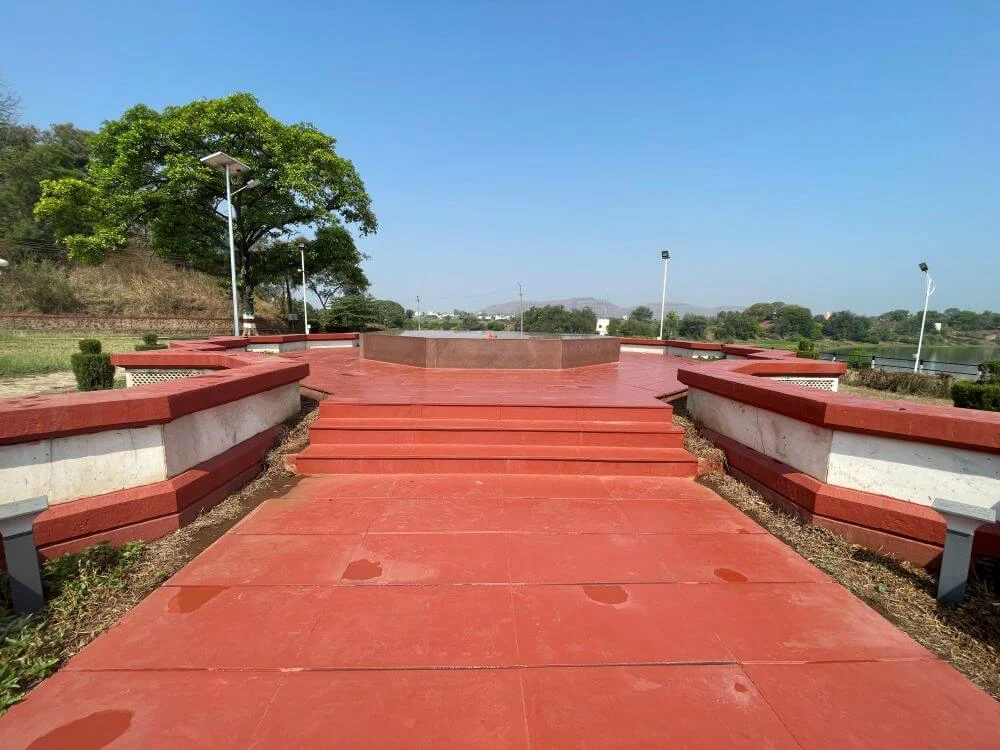
At the sacred Preeti Sangam of Karad — where the Krishna River descending from the north meets the Koyna River from the south — stands the Krishnamai Temple, the revered gramdevata (village deity) of the city. This site, celebrated in the Karhad Mahatmya, is one of Maharashtra’s most spiritually significant river confluences and has been a hub of devotion and culture for centuries.
Karad’s history dates back to ancient times, with mentions in epic literature like the Mahabharata as a territory conquered by Sahadeva during Yudhishthira’s Rajasuya Yagna. Historically called Karhatak or Karhatadesh, the town was once a Brahmin settlement, flourishing under dynasties from the Rashtrikas (7th–3rd century BCE) and Satavahanas to the Chalukyas, Rashtrakutas, Shilaharas, Yadavas, Bahamanis, Adil Shahis, Marathas, and later the British. The Shilaharas, though based in Kolhapur, claimed the title Karhatadhipati — “Ruler of Karad” — underscoring the prominence of the Preeti Sangam.
The temple’s origin is tied to a legend of Bajipant Karkare of Chaphal, who brought a white stone idol of the goddess from northern India intending to install it in Konkan. A divine vision to his wife redirected the idol to Antaji Bahirav of Karad for consecration on the Krishna’s banks. The present structure was commissioned by Rajsabai, wife of Bhawanrao Pantpratinidhi of Aundh, after earlier caretakers passed without heirs.
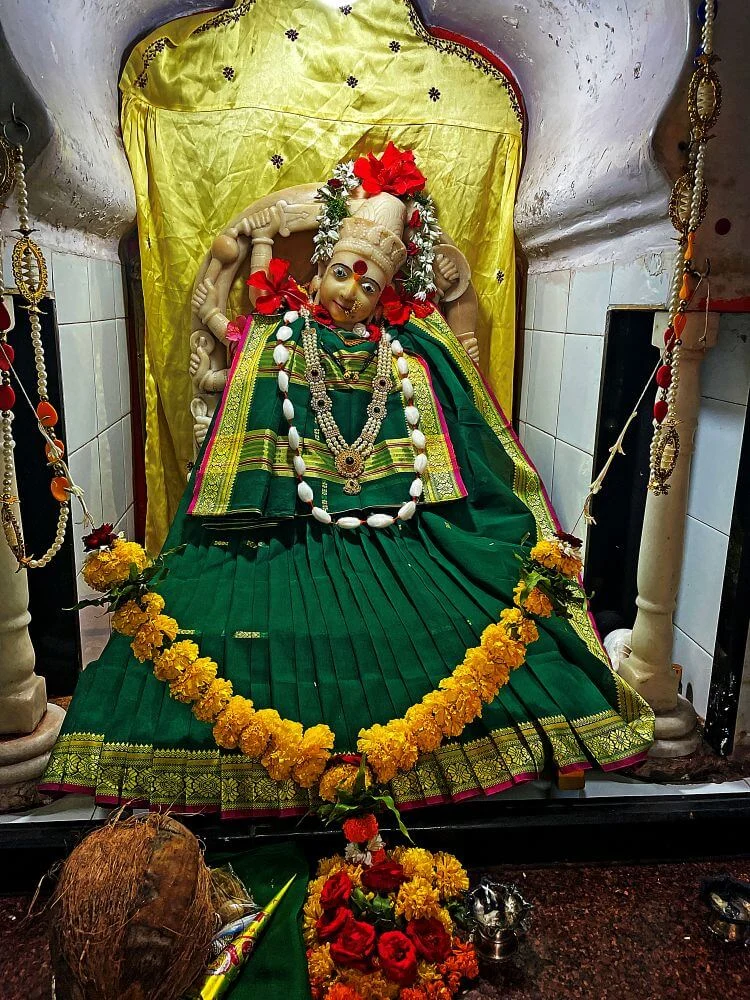
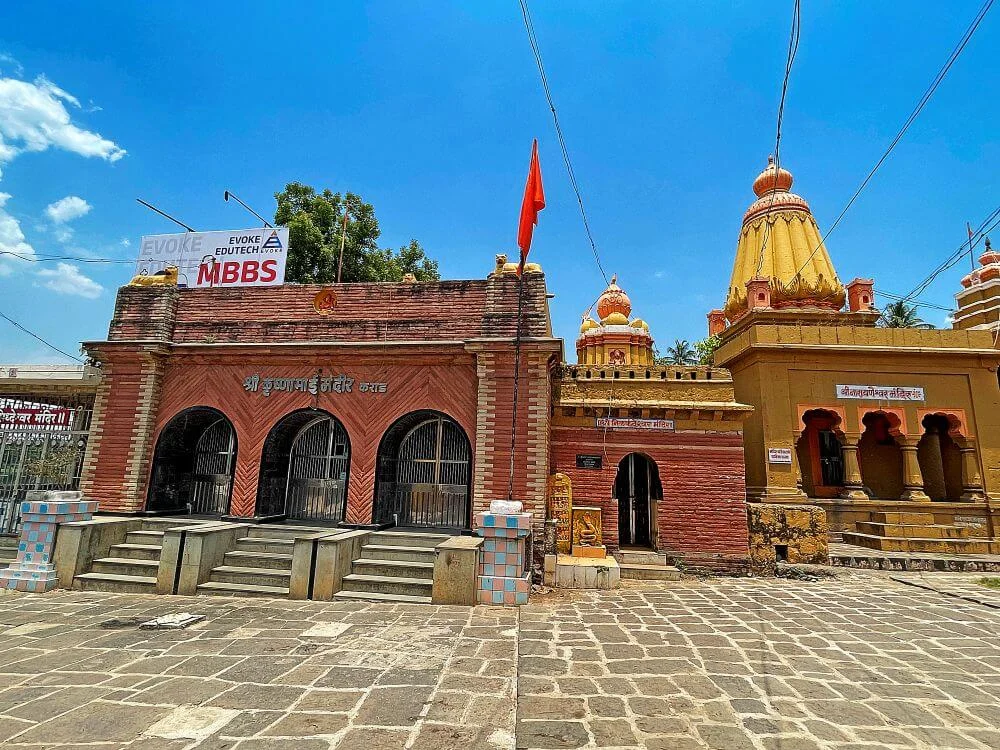
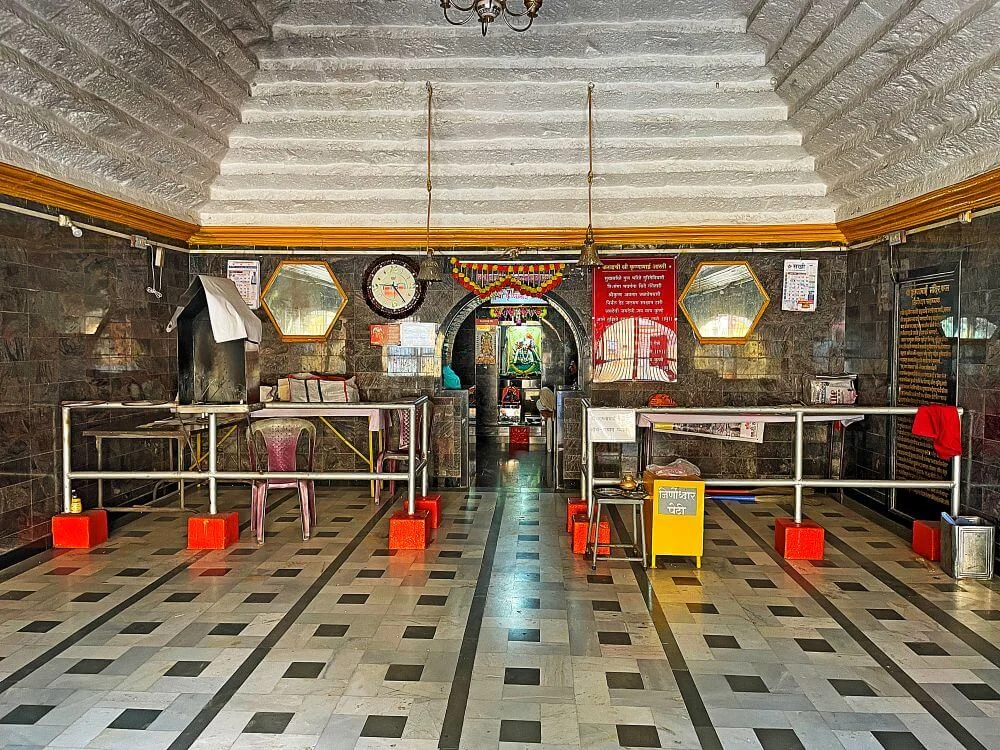
The idol of Krishnamai, described in the writings of reformer Gopal Ganesh Agarkar, depicts the goddess as Mahishasurmardini with a serene, smiling face and a slightly tilted head gazing at the Krishna river. She has ten arms, each holding symbolic weapons or ornaments — a trident, shield, kamarpatta (waist belt), bugdi (earring), mangalsutra, toe-rings — and is dressed in zari-bordered attire. The striking white marble idol sits on a vajrapitha (diamond throne) in the sanctum, preceded by a grand hall and an intermediate chamber. Designed with a fort-like entrance accessed via five steps, the temple blends defensive architecture with sacred aesthetics.
Krishnamai’s religious calendar features two major yatra festivals each year — the last Monday of Shravan and the Chaitra festival (first to fourth day of the dark fortnight). During the Shravan yatra, palanquins from surrounding temples — including Sangameshwar, Ratneshwar, Bhairoba, Navagraha, Kamleshwar, and others — converge at the temple, and devotees take ritual baths in the Krishna before offering prayers. The Chaitra festival includes processions to the ghat, group worship, and community feasts. The Kartik Purnima festival here is marked by the unique ghat pajlane (lighting of the ghats) with fireworks and lamps illuminating the riverbanks.
The temple, recently renovated, continues to be a center of cultural gatherings, spiritual discourses, and devotional music. Its location along the river ensures it remains a place where myth, history, and faith flow together like the sacred rivers at its feet
This Website is developed by

Aseemit Services & Solutions
Contact : +91 7219259149
Nearby Facilities for Visitors
-
Bus Stop :
Karad -
Railway Station :
Karad -
Airport :
Kolhapur
-
Mechanic :
Karad -
Petrol Pump :
Karad -
Medical Help :
Karad