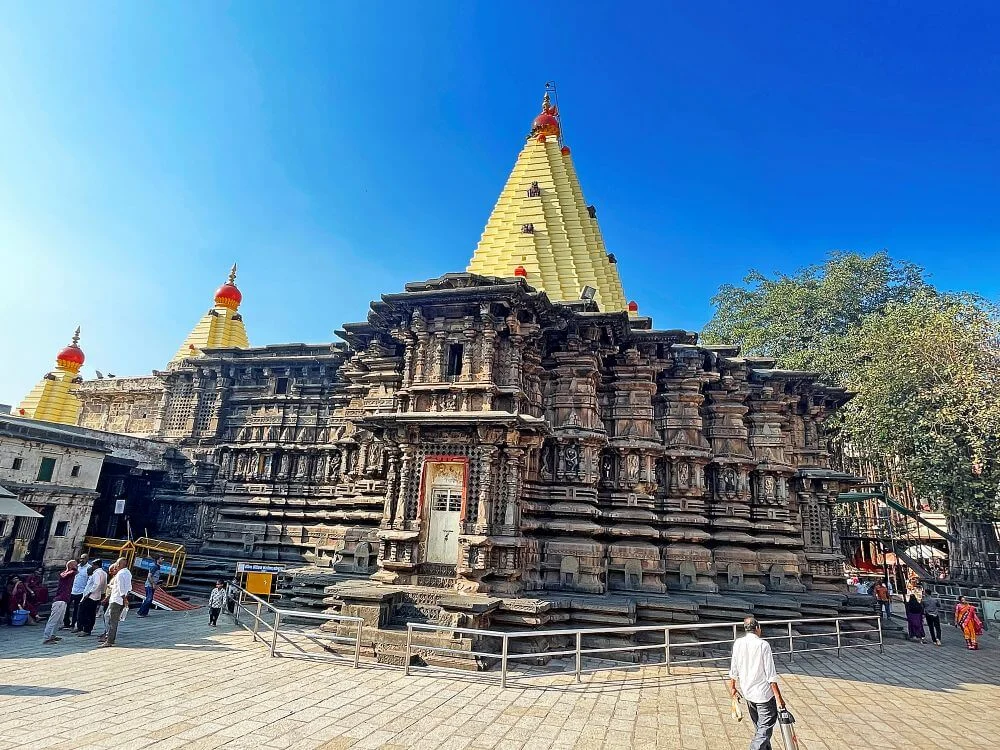
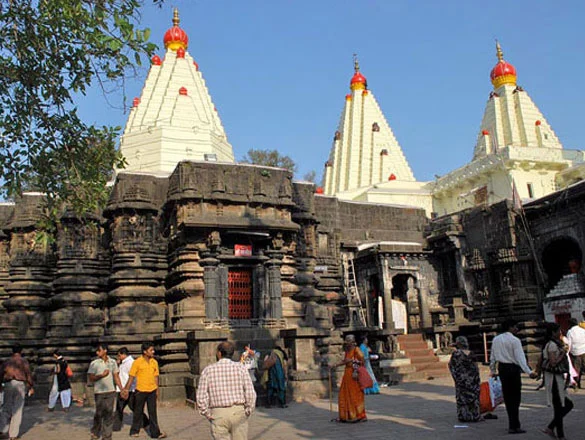
Mahalaxmi (Ambabai) Temple, Kolhapur
Shakti Peetha and Astronomically Aligned Temple
Find here
How to
Reach
Located 4 km from Kolhapur Railway Station, the Mahalaxmi Temple is easily reached by ST buses and private vehicles from all major cities of Maharashtra and Karnataka. Well-maintained, flat walkways and a spacious parking area make visits simple for all ages; accessibility is excellent, with local guides and helpers available
Best Time to
Visit
Pilgrims visit year-round, but the temple is most festive during Navratri (September–October), Shravan Mondays (July–August), and the spectacular Kiranotsav (Sun-rays Festival) held in January–February and November, when the setting sun illuminates the deity through a precise astronomical alignment. For optimal weather and lively celebrations, October to March is the recommended travel period
How Much Time Do You Need?
About Mahalaxmi (Ambabai) Temple, Kolhapur
As one of the Sade Teen (three and a half) Shakti Peethas, the Mahalaxmi Temple is steeped in mythology. According to legend, the goddess Mahalaxmi slayed the demon Kolhasur, thereby liberating the city that now bears his name. The Kohla Phod Utsav commemorates this act with a pumpkin-breaking ritual, marking a victory of divine energy
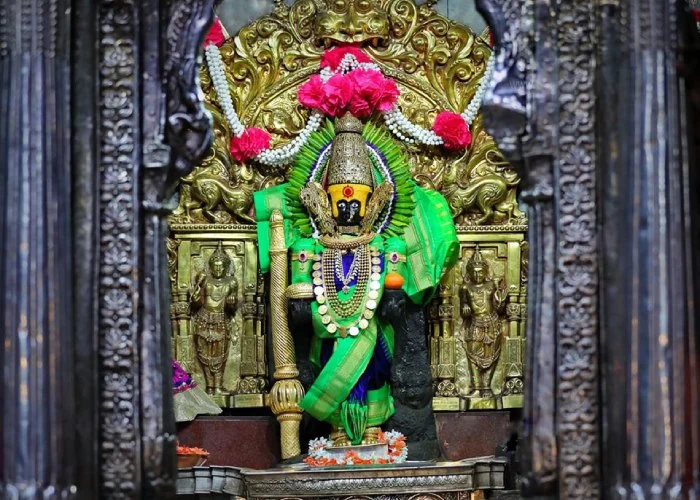
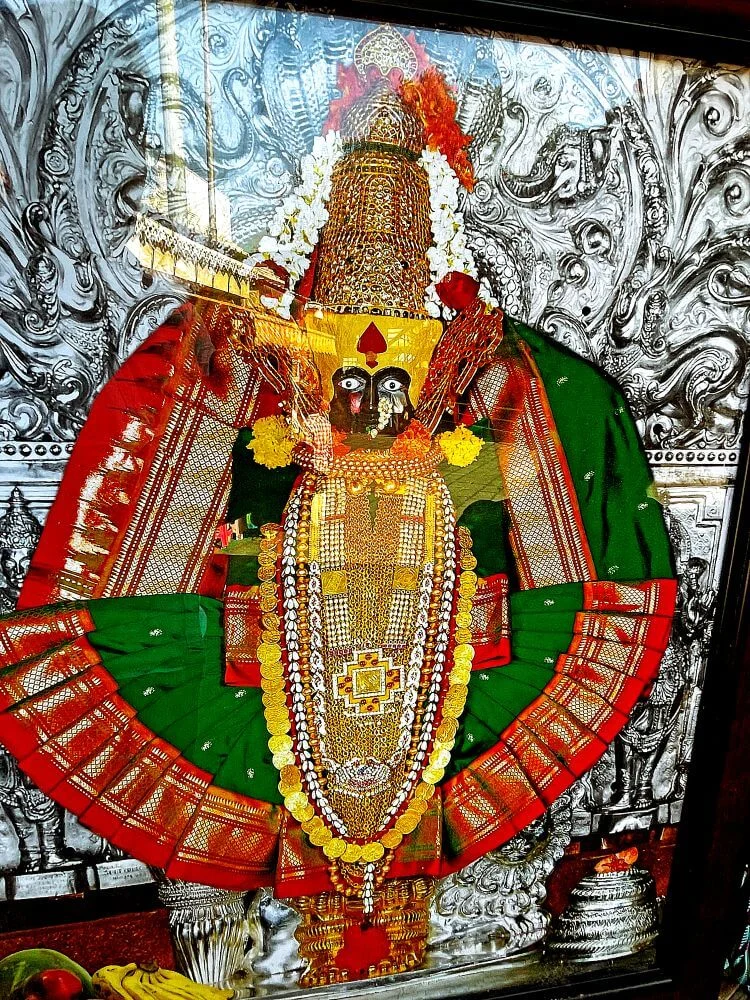
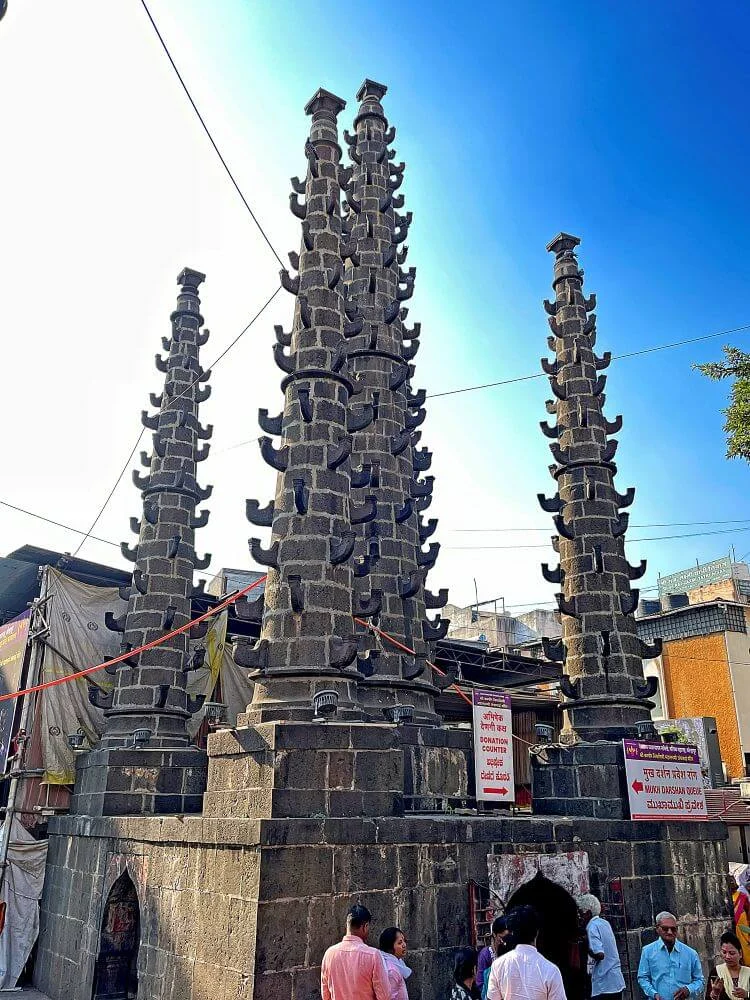
The temple’s architectural legacy spans centuries, with foundations laid by Chalukya king Karandev in the 7th century CE and subsequent expansions by Shilahara and Yadava rulers. Crafted almost entirely in Hemadpanti style, the temple complex features three sanctums (Mahalaxmi, Mahakali, Mahasaraswati), a black-stone courtyard, four grand gateways, and an iconic Nagarkhana (Drum House) on the west entrance. The striking 1.22 m-tall black basalt idol of Mahalaxmi stands on a high pedestal, holding symbols of prosperity, fertility, and strength—a mace, shield, fruit, and leaf. Above her head is a five-hooded serpent and a Shivling behind, symbolizing her unity with Shiva. Unlike most goddess temples, Mahalaxmi is revered as both Vishnupatni and Shivapatni, reflecting Kolhapur’s profound theological traditions.
Key adjoining shrines for Mahakali and Mahasaraswati complete the trinity. Additional temples within the complex celebrate Sheshashayi Vishnu, Datta, Vitthal-Rukmini, Navagraha, and host a majestic Nritya Mandap (dance hall).
Astronomical Marvel: The famous Kiranotsav draws visitors from across the globe. The setting sun’s rays travel through ancient architectural alignments, illuminating the goddess’s feet, chest, and finally her entire idol over three days each in January–February and November—a testament to ancient architectural genius
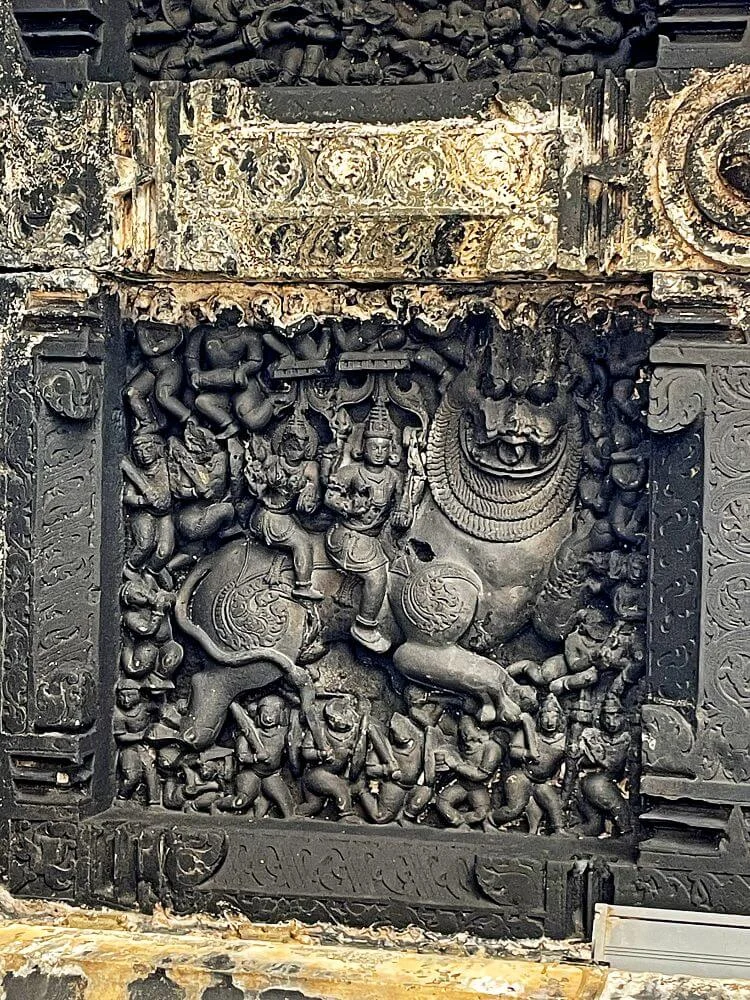
Daily rituals, Friday and Monday crowds, full-moon processions, special city yatras, and palanquin journeys to nearby Tembalai Hill mark the temple’s living traditions. The site’s Portuguese bell, imported by Chhatrapati Sambhaji Maharaj in 1683, still resounds during special occasions. The temple’s walls and halls are adorned with exquisite carvings, several containing inscriptions from different regimes spanning the 9th to 18th centuries, and legends from both Hindu and Jain faiths are woven into its stonework
This Website is developed by

Aseemit Services & Solutions
Contact : +91 7219259149
Nearby Facilities for Visitors
-
Bus Stop :
kolhapur -
Railway Station :
kolhapur -
Airport :
kolhapur
-
Mechanic :
kolhapur -
Petrol Pump :
kolhapur -
Medical Help :
kolhapur