Shree Wadeshwar Mahadev Temple, Ambhai
12th‑Century Chalukyan Tridal Shiva Shrine of Marathwada
Find here
How to
Reach
The temple is easily reachable by motorable road, with private vehicle access and parking available near the site
Best Time to
Visit
Best time to visit is between November to February. Festivities like Mahashivratri and Shravan month provides best opportunity to experience local culture and tradition
How Much Time Do You Need?
About Shree Wadeshwar Mahadev Temple, Ambhai
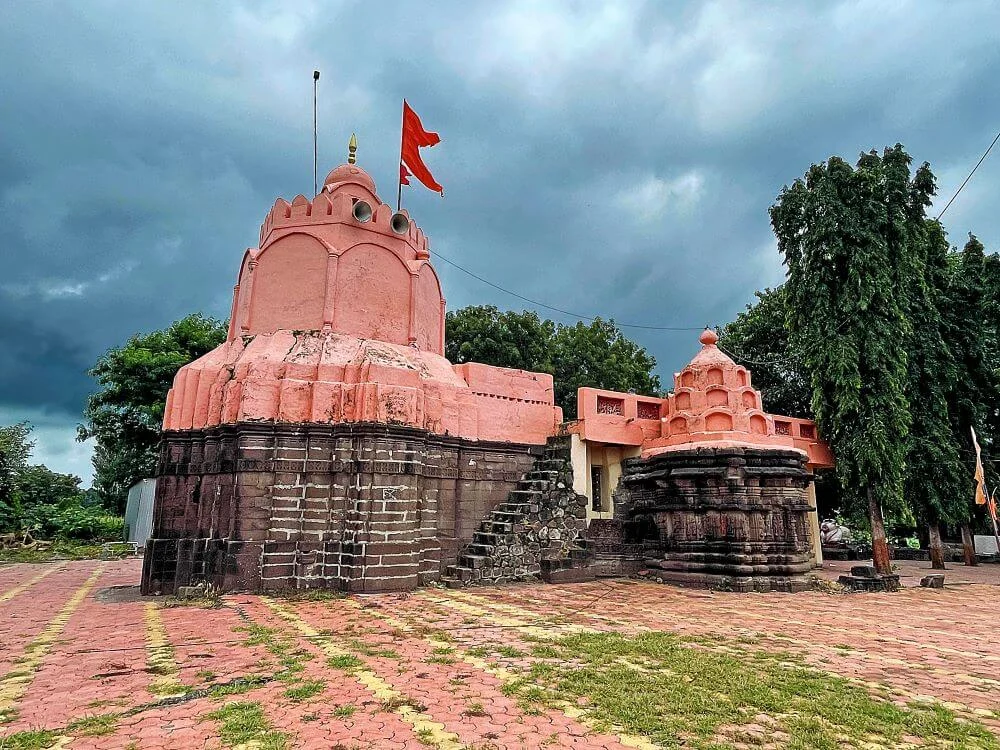
Nestled near Janjala Fort in Ambhai‑Vadgaon village, the Shree Wadeshwar Mahadev Temple is one of the most architecturally remarkable ancient temples of Marathwada. Dating back to the 12th century, it represents the Chalukyan style of art and architecture, a period renowned for its stone-carved intricacy and spiritual symbolism. Dedicated to Lord Shiva, this temple stands out for its unique tridal (three‑sanctum) design, where each garbhagriha (sanctum) houses a Shivalinga — a rare architectural concept in Hindu temple construction.
Set amid the picturesque foothills of the Ajanta ranges, the temple stands elevated on a spacious stone platform, with a beautifully preserved ancient stepped well at its forefront. A blend of spirituality and artistry, Wadeshwar Mahadev Temple offers visitors a glimpse into India’s medieval sculptural excellence and historical depth. The site, once part of early Chalukya influence in the Deccan, retains carvings and motifs comparable to the rock-cut caves of Ellora, located nearby.
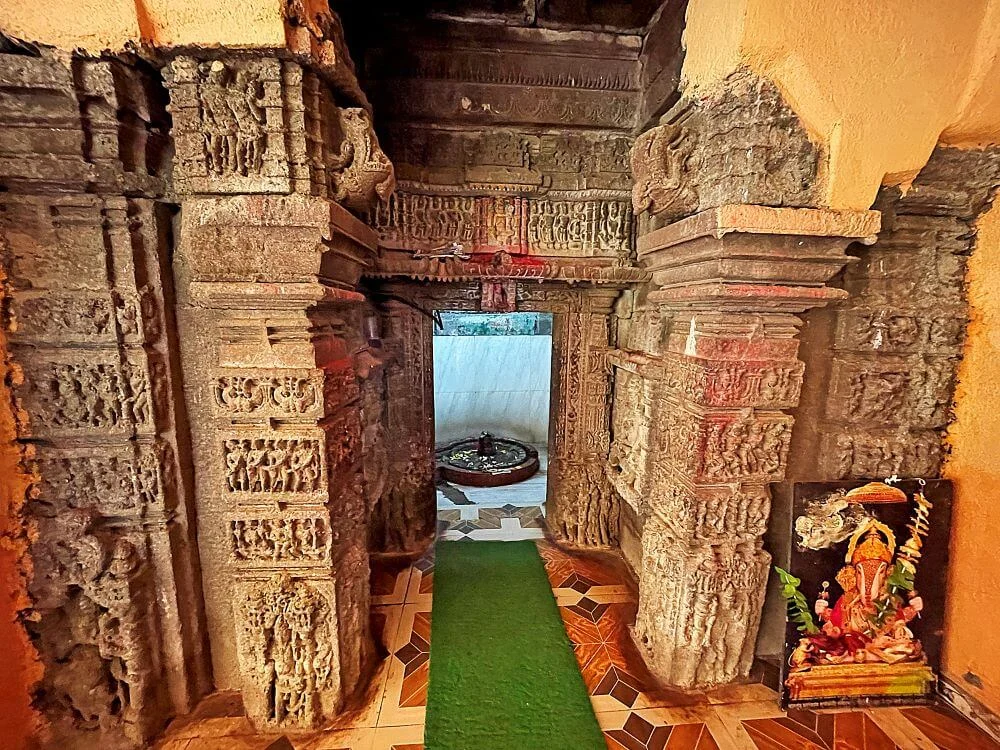
The temple’s layout is both methodical and divine in proportion. A large ornamented Nandi sits in front of the east-facing main sanctum within a mandap (hall) that connects to three sanctums aligned towards the west, south, and north. Each sanctum is entered through its own vestibule (antarala) opening into the common hall. Carved niches along these passages contain idols of Brahmi, Saraswati, and Vaishnavi, the three feminine energies of creation.
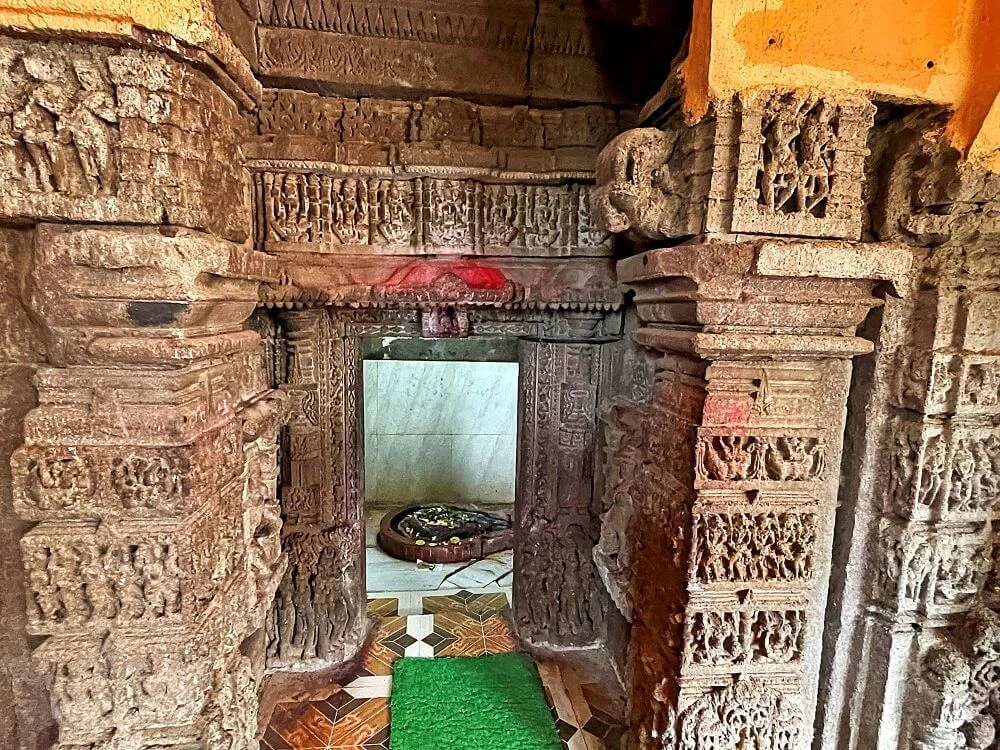
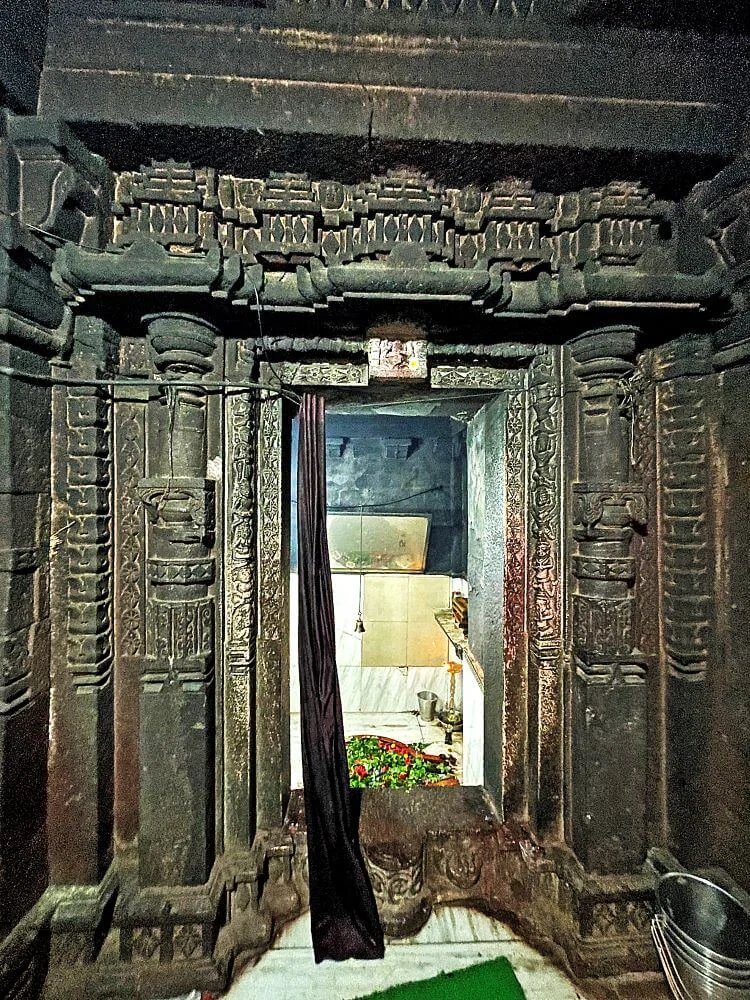
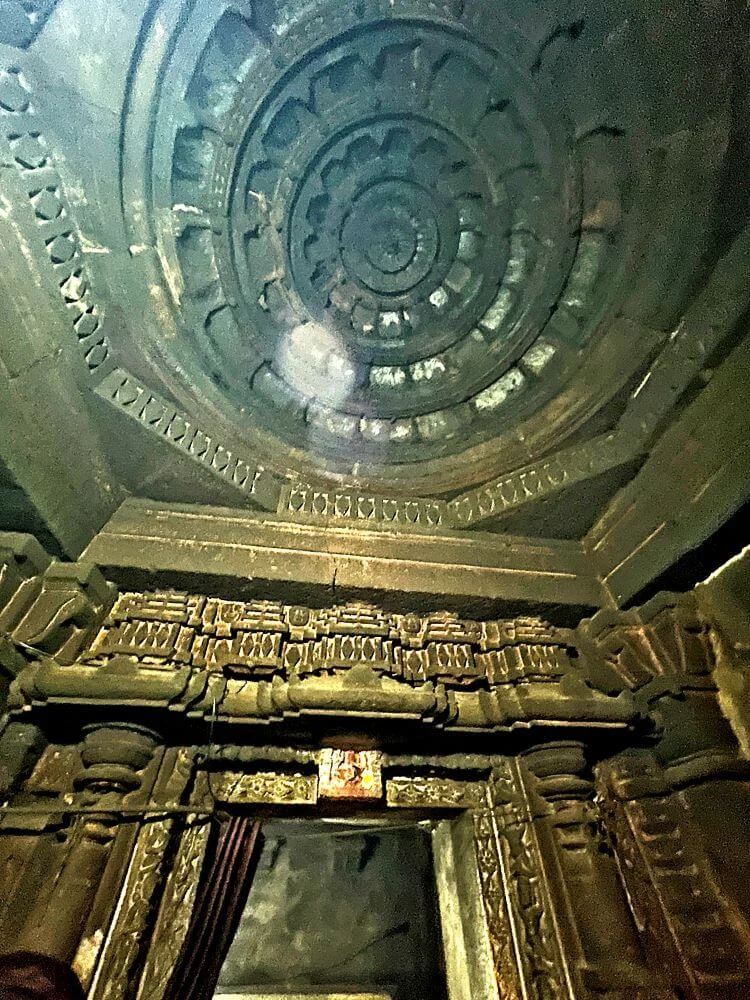
The sanctums are linked by gracefully decorated doorframes, featuring the keertimukha motif — a protective guardian face — alongside vyalas (mythical beasts), vines, flower bands, and small sculpted musicians. Above these doorways, finely detailed friezes depict dancing apsaras and a central Ganesha on the lintel. Inside, four to five steps descend into the sanctums where Shivalingas rest in tranquility. The walls bear carvings of Ashta‑Matrikas, each mounted on distinctive vahanas (vehicles) such as swans, elephants, and boars, displaying masterful iconography.
Among the three shrines, the southern sanctum offers the richest sculptural narrative: panels of Vishnu, Shiva, Brahma, and the Navagrahas (nine planets) are framed above its doorway. The northern sanctum mirrors these details, housing images of Ganesha and the seven Mother Goddesses (Saptamatrikas).
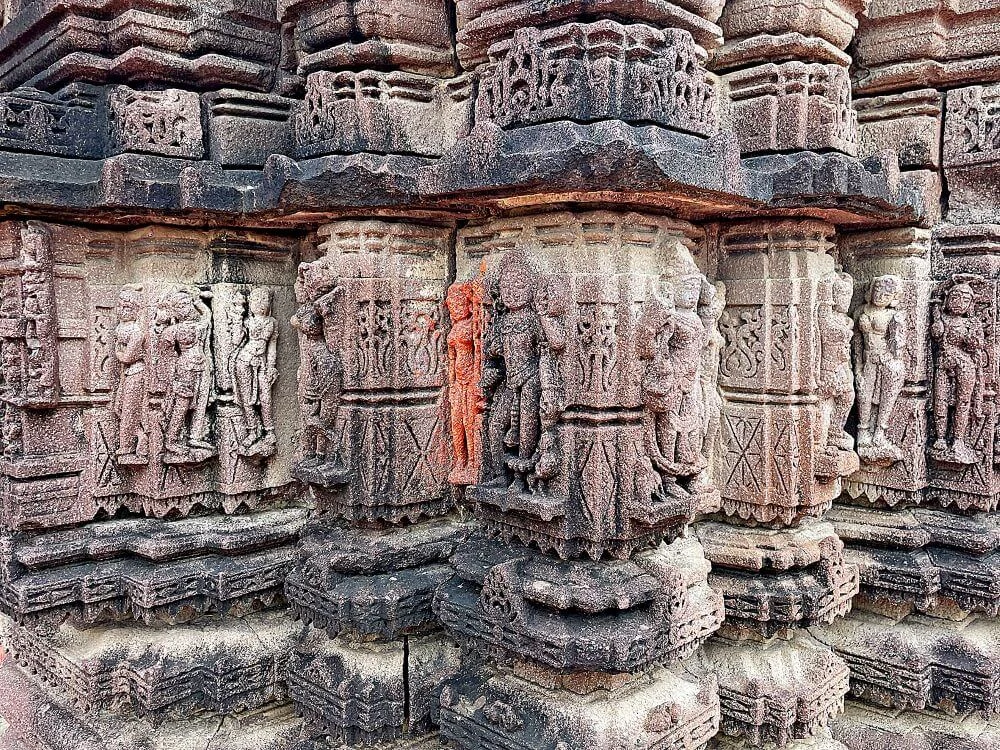
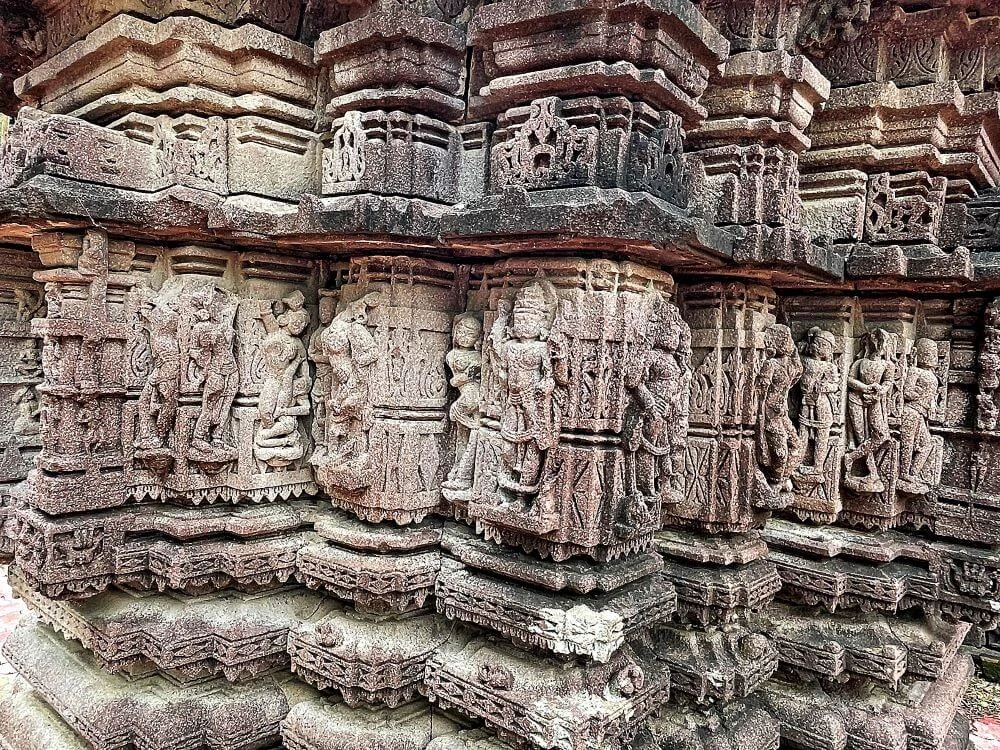
Externally, the temple is built upon an elevated stone adhisthana (base), composed of multi-tiered mouldings — upan, antarapatt, kumud, keertimukha, and hansa bands. The walls are fully sculpted with vivid reliefs depicting Chamunda, Varaha, Nataraja, Kartikeya, Narasimha, and Surya, alongside dynamic scenes from the Ramayana and Mahabharata. Carved motifs of lotuses, elephants, makaras, and vines add ornamental richness. Portions of the northern and southern exteriors feature sensuous sculptures reminiscent of Khajuraho, representing the artistic expression of divine creation, a hallmark of Indian temple art.
Although the original sabhamandap was replaced with a newer hall, several ancient fragments and sculptures from the earlier structure are carefully preserved in the temple area. Today, this star‑shaped, intricately sculpted shrine remains one of Maharashtra’s few fully carved temples, symbolizing the architectural might and devotional artistry of Chalukyan craftsmen
This Website is developed by

Aseemit Services & Solutions
Contact : +91 7219259149
Nearby Facilities for Visitors
-
Bus Stop :
Ambhai Vadgaon -
Railway Station :
Sillod -
Airport :
Sambhajinagar
-
Mechanic :
Sillod -
Petrol Pump :
Sillod -
Medical Help :
Sillod