Kailasa Temple, Ellora
World’s Largest Monolithic Rock-Cut Temple at Ellora
Find here
How to
Reach
Easily accessible by motorable road to the Ellora Caves parking area
Best Time to
Visit
Best time to visit is between November to February. Festivities like Mahashivratri and Shravan month provides best opportunity to experience local culture and tradition
How Much Time Do You Need?
About Kailasa Temple, Ellora
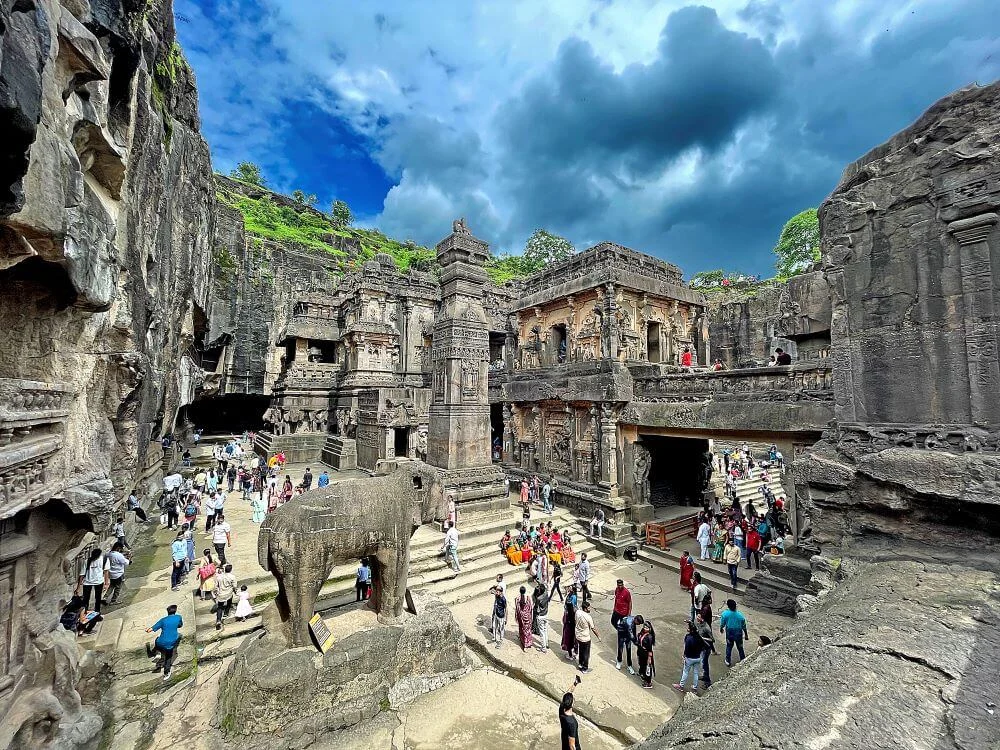
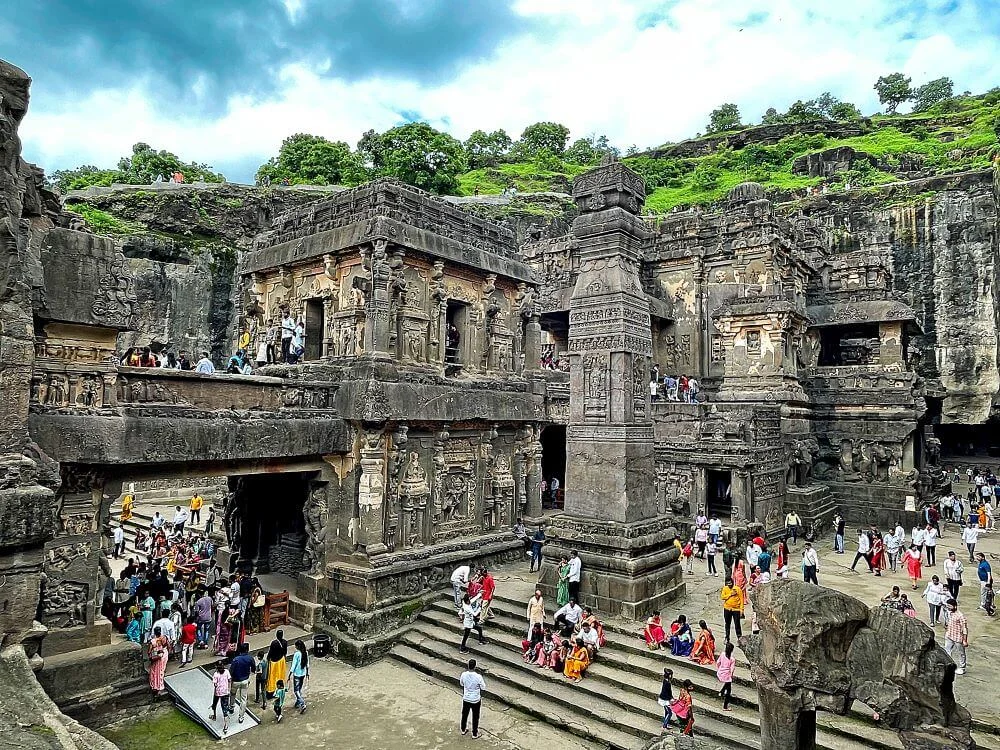
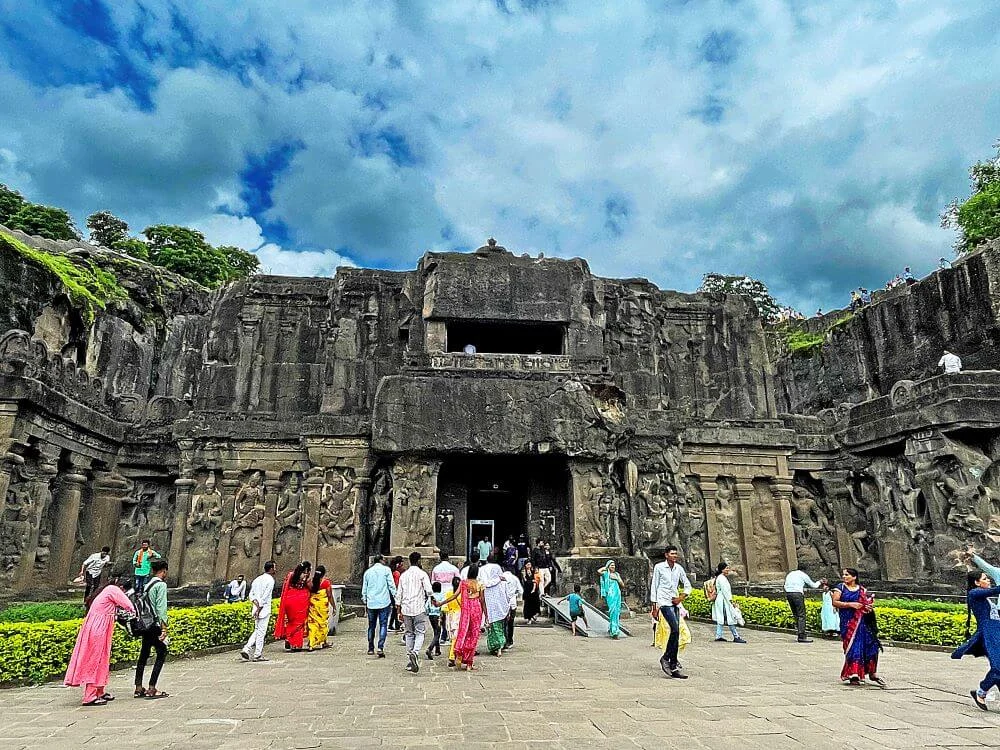
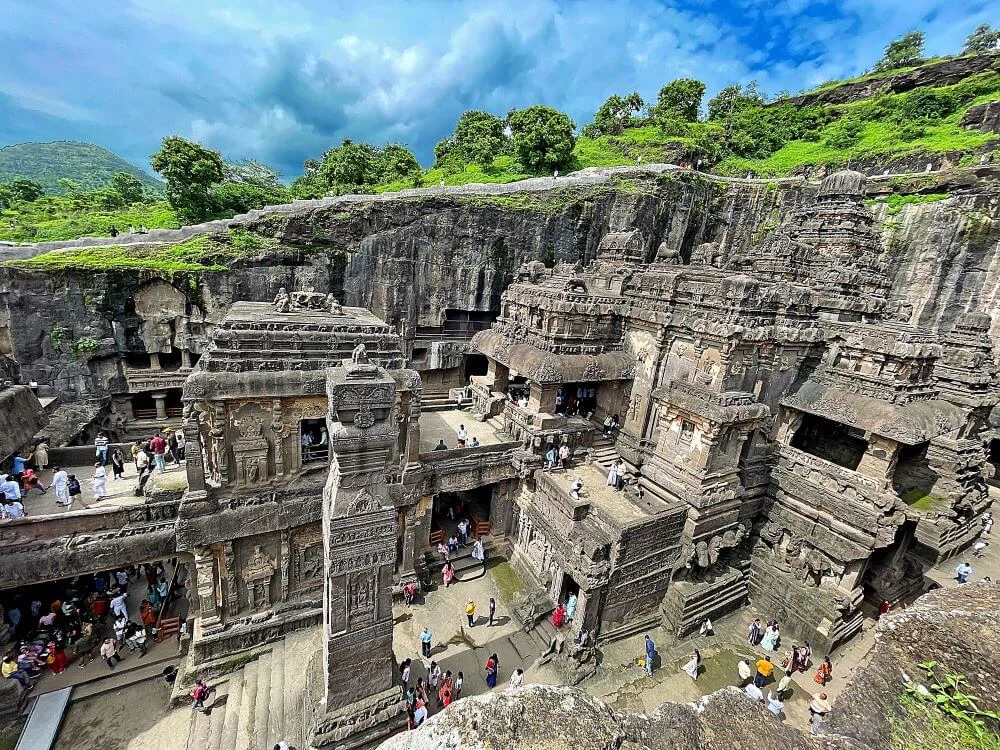
At the base of the Mahishadri Hills, near the banks of the Yelaganga River, stands one of the world’s greatest architectural marvels — the Kailasa Temple at Ellora. Dedicated to Lord Shiva as Kailasanatha, this monumental structure is celebrated as the largest single monolithic rock-cut temple in the world and a UNESCO World Heritage Site. Hewn in the 8th century CE during the reign of the Rashtrakuta dynasty, it is both a triumph of ancient engineering and a masterpiece of spiritual artistry.
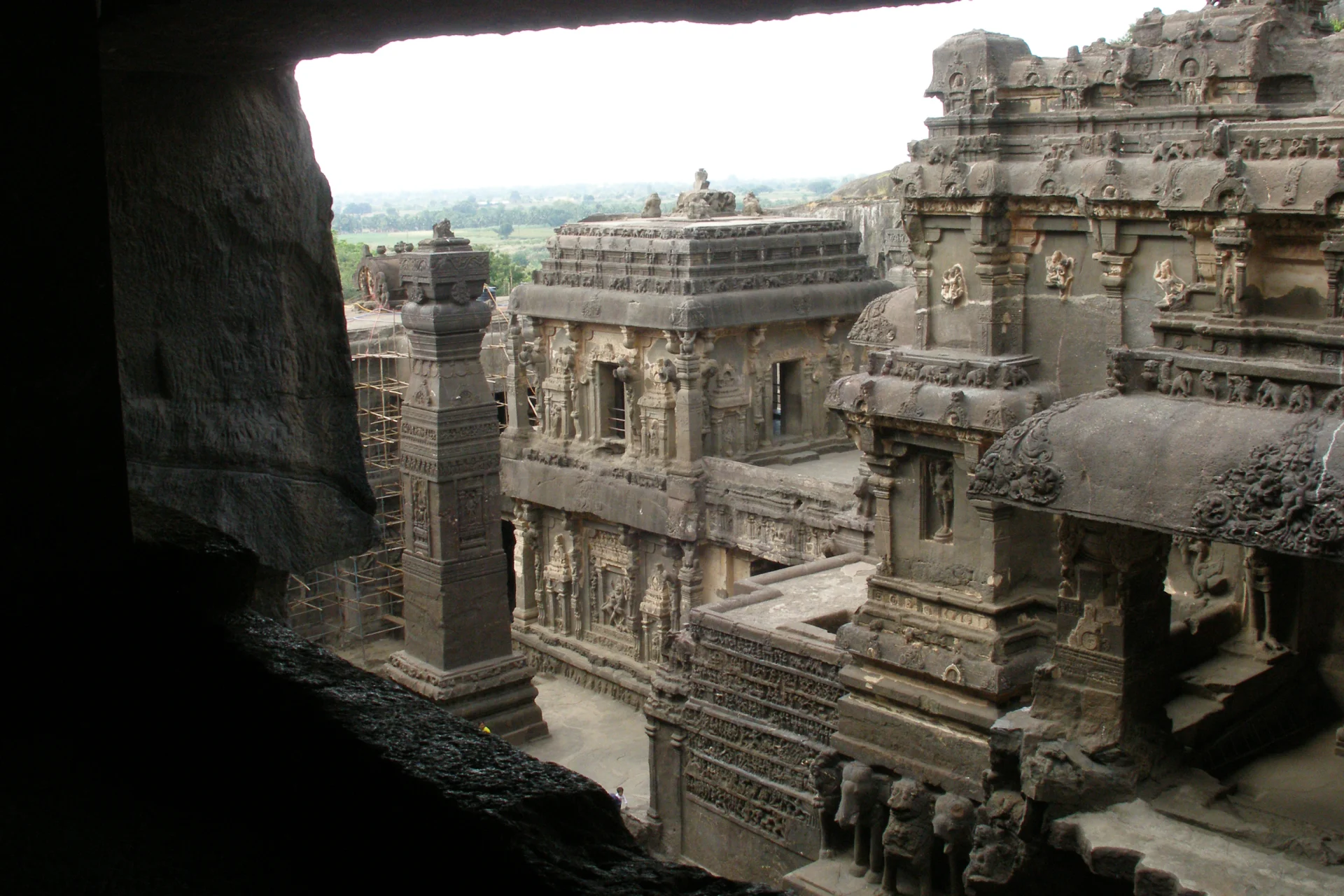
Commissioned initially by King Dantidurga and completed by King Krishna I, the temple took several generations of Rashtrakuta rulers around 150 years to embellish, adding surrounding shrines such as the Matṛka, Lankeshwar, and Sarita temples. Measuring 300 feet in length and 175 feet in width, it fully integrates Nagara (northern) and Dravidian (southern) architectural elements — resembling Karnataka’s Virupaksha Temple of Pattadakal, yet unique in being carved from a single basalt rock.
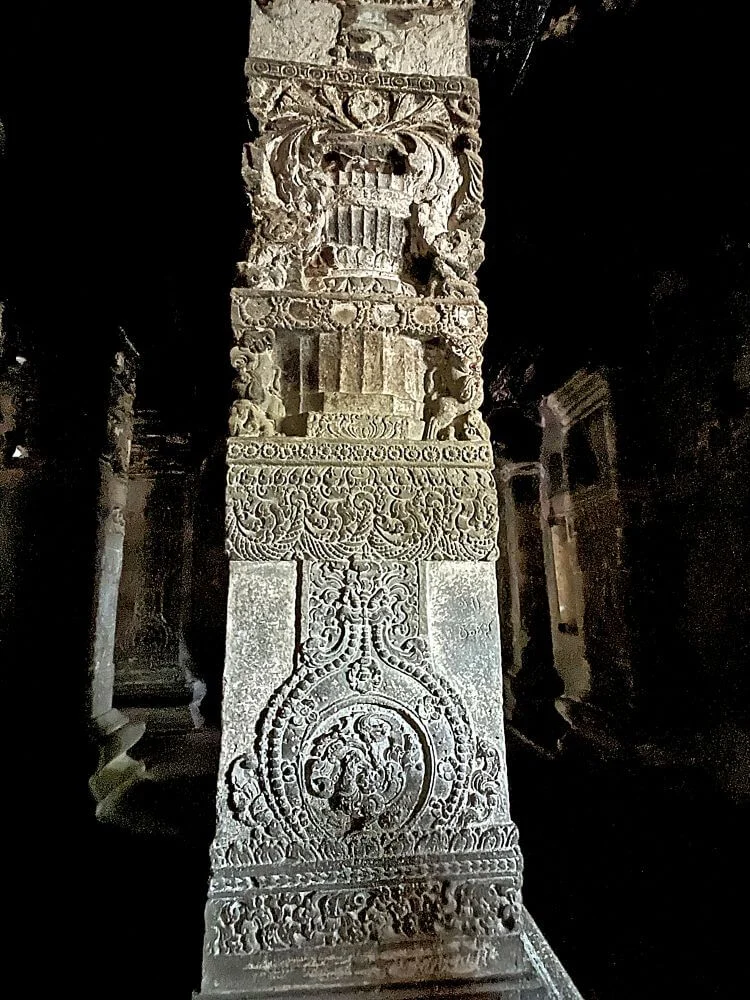
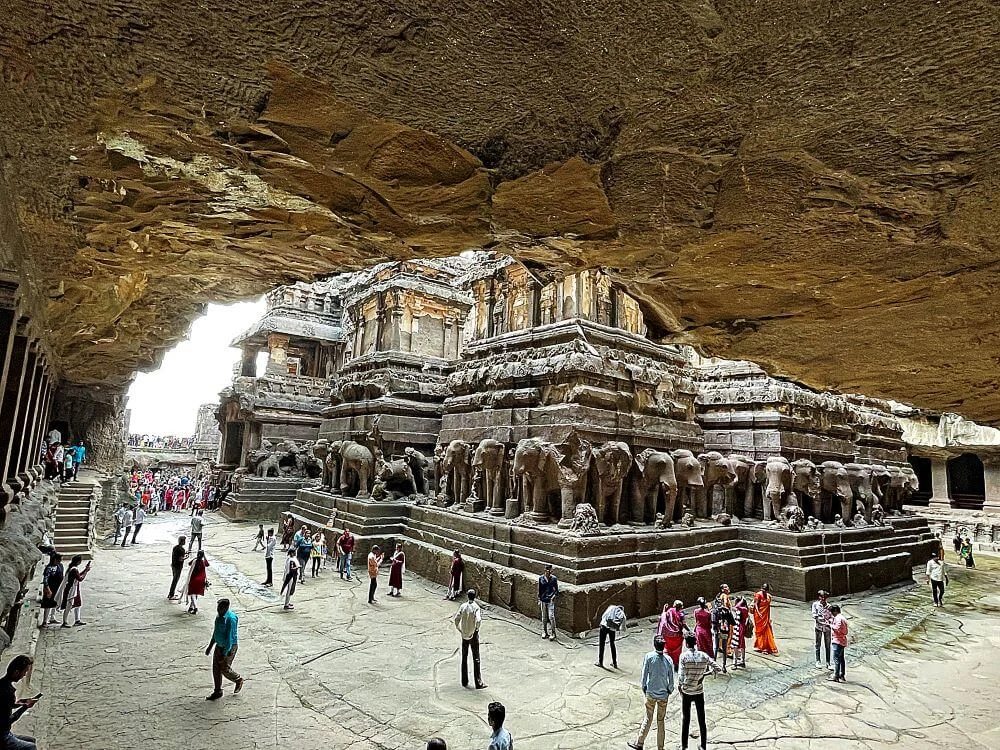
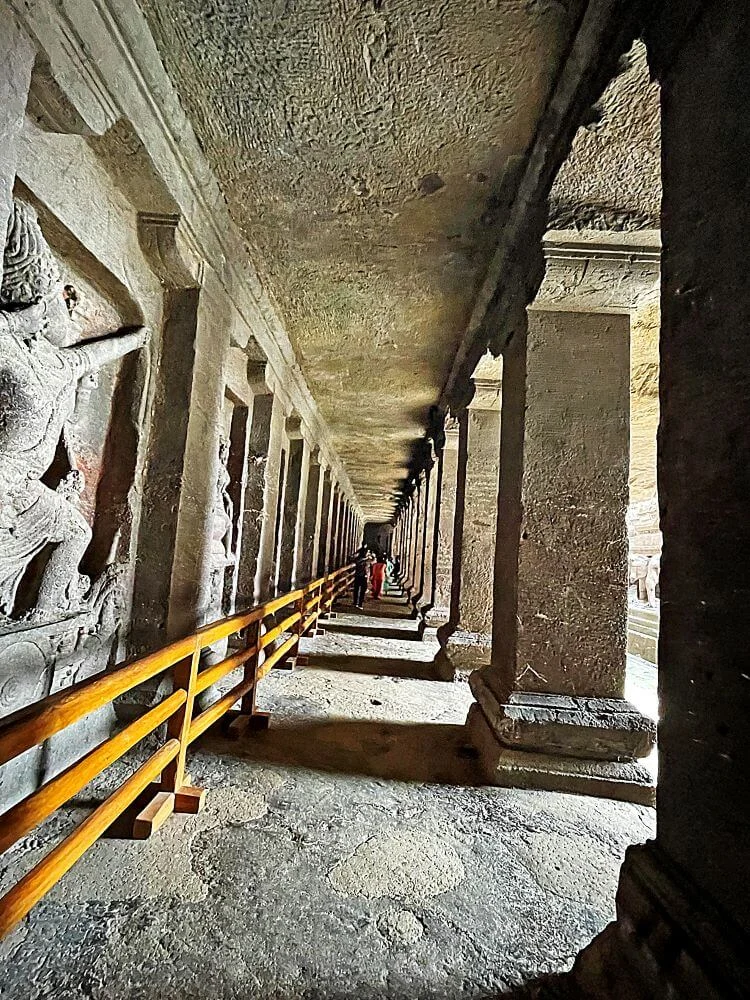
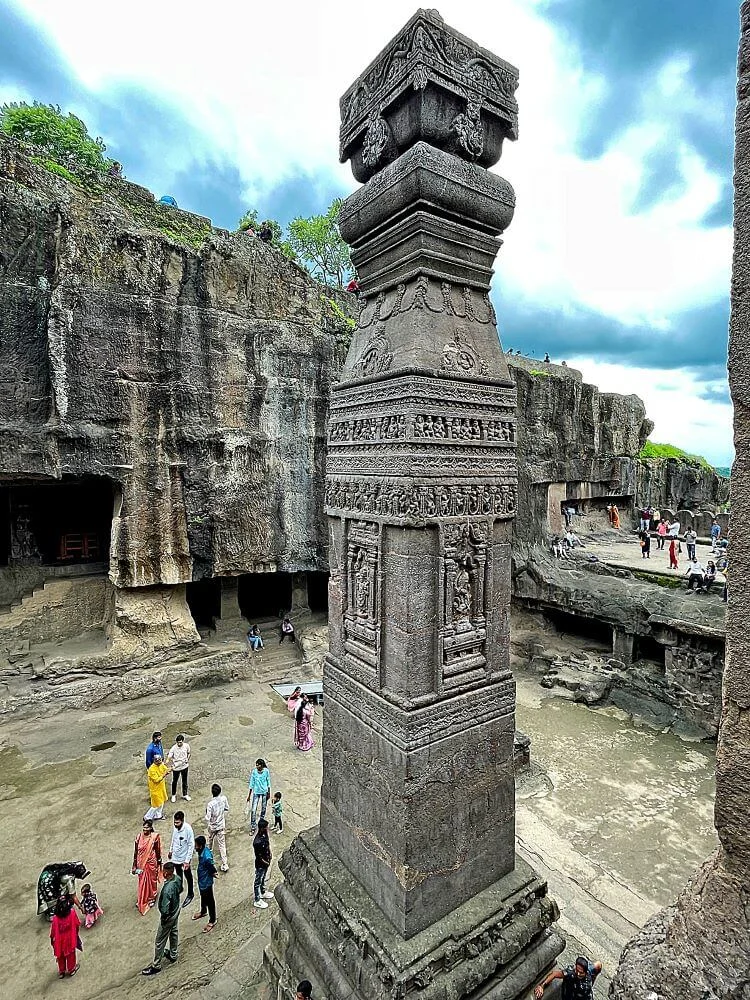
The creation process was as awe-inspiring as the temple itself: ancient artisans excavated from the top down, removing over 20,000 tons of rock by hand, all without leaving debris on site — possibly repurposed for other temples of the time. The complex includes twin-storeyed gateways (gopurams), a vast courtyard, intricately pillared halls, subsidiary shrines, and an imposing stone elephant.
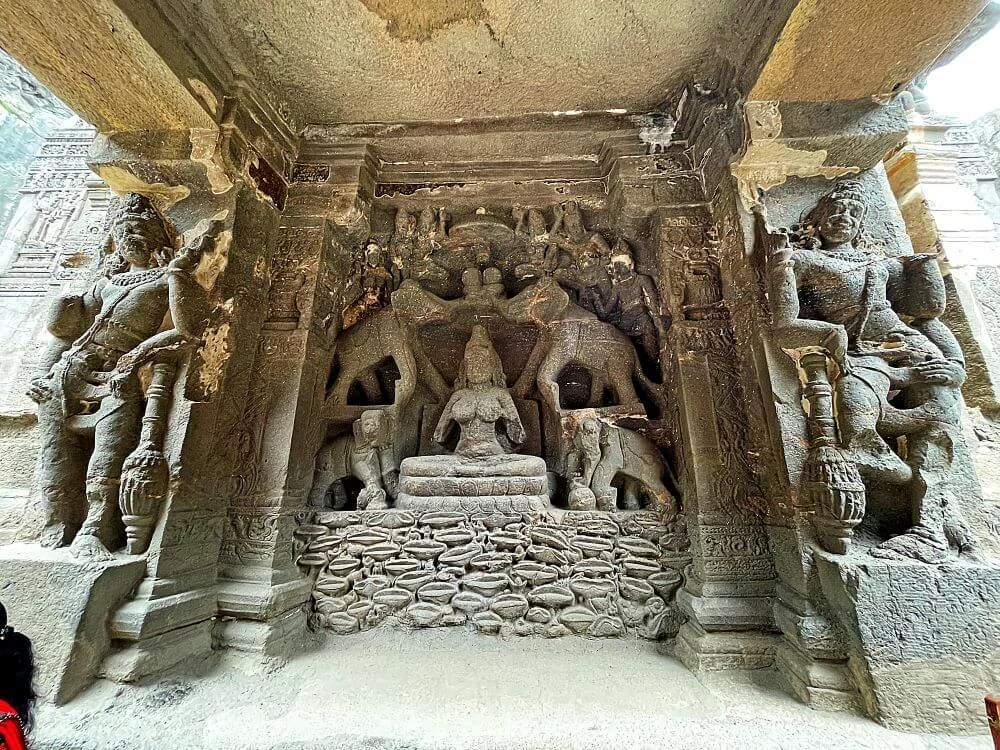
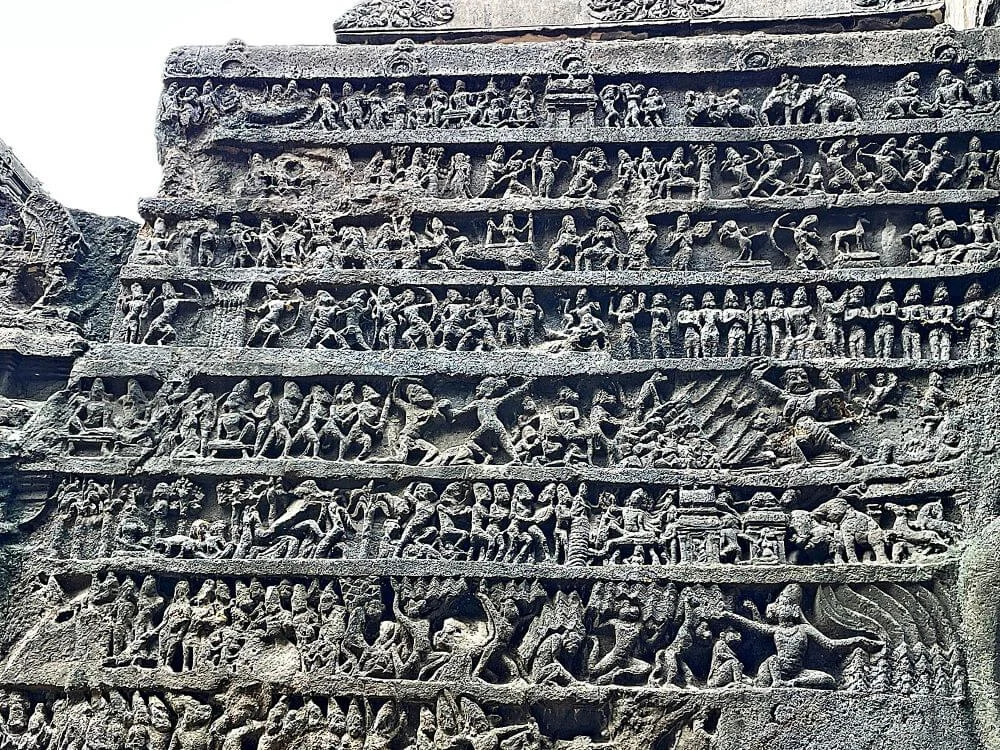
Within the main sanctum lies a vast Shivalinga surrounded by five smaller shrines dedicated to the goddesses Ganga, Yamuna, and Saraswati. The Nandi Mandapa, set separately, faces the sanctum with dignified grandeur. The temple’s plinth, walls, and pillars are richly adorned with reliefs depicting episodes from the Ramayana and Mahabharata — Ravana lifting Mount Kailash, the Tripurantaka legend, and heroic battles — alongside bands of elephants, lions, and mythical vyalas.
Legends further enrich its history. One famous tale tells how Krishna I’s queen, eager to see the temple’s completion, vowed to fast until she beheld its spire. The architect Kokasa of Paithan fulfilled her wish in just seven days by carving from the top down, earning eternal fame. Another legend claims Aurangzeb attempted to demolish the temple — but even his armies failed, leaving him in awe of its magnificence. Originally lime-washed to symbolize the snowy peak of Mount Kailash, traces of the white coating are still visible.
The Kailasa Temple symbolizes cosmic order, divine unity, and the artistic pinnacle of devotion in stone, inspiring historians, archaeologists, and pilgrims alike. In 2019, the Reserve Bank of India honored it by featuring its image on the ₹20 note
This Website is developed by

Aseemit Services & Solutions
Contact : +91 7219259149
Nearby Facilities for Visitors
-
Bus Stop :
Verul -
Railway Station :
Sambhajinagar -
Airport :
Sambhajinagar
-
Mechanic :
Verul -
Petrol Pump :
Verul -
Medical Help :
Verul