Ghrishneshwar Jyotirlinga Temple, Verul
12th Jyotirlinga and Ellora Pilgrimage Heritage
Find here
How to
Reach
Accessible via motorable road with full parking facilities
Best Time to
Visit
Best time to visit is between November to February. Festivities like Mahashivratri and Shravan month provides best opportunity to experience local culture and tradition
How Much Time Do You Need?
About Ghrishneshwar Jyotirlinga Temple, Verul
At the foot of Mahishadri Hill, near the banks of the Yelaganga River and adjacent to the world-famous Ellora Caves, stands the revered Shree Ghrishneshwar Jyotirling Temple — the twelfth and final Jyotirlinga of Lord Shiva described in the Shiva Purana. This sacred site has been a centre of devotion since the Rashtrakuta era and is now recognized under the Government of India’s PRASAD 2 scheme for pilgrimage tourism.
The temple’s origins date back to the Rashtrakuta King Krishnaraja, who commissioned its construction. Centuries later, in 1599 CE, Maloji Raje Bhosale, grandfather of Chhatrapati Shivaji Maharaj, discovered hidden treasures and used them to rebuild both the shrine and the Shivalaya Tirth reservoir. The shrine suffered destruction during Aurangzeb’s reign, but in 1730 CE, Gautamabai Holkar restored it, with further development by the devout Ahilyabai Holkar in 1769 CE, whose legacy of temple construction is evident across India.
One legend recounts a playful game of dice between Parvati and Shiva. After losing, Shiva retreated to the Kamyak forest, where Parvati, disguised as a tribal maiden, followed him. When she thirsted, Shiva pierced the earth with his trident, releasing the Bhogavati River (later called Shivalay Tirth). While preparing her vermilion, friction (gharsana) from her hands produced a radiant spark that manifested into a Shivalinga, thus naming the deity Ghrishneshwar — “Lord born of friction.”
Another enduring tale tells of Sudharma and his wife Sudeha, a childless couple of the Bharadwaj lineage. Sudeha persuaded Sudharma to marry her sister Ghushma, who daily made sand Shivalingas and immersed them in a pond after worship. When Ghushma bore a son, Sudeha’s jealousy led her to murder the child and throw his body into the pond. Ghushma remained unwavering in her devotion, and Lord Shiva, pleased with her faith, restored her son to life and manifested here as the Jyotirlinga Ghrishneshwar, promising eternal residence for the world’s welfare.
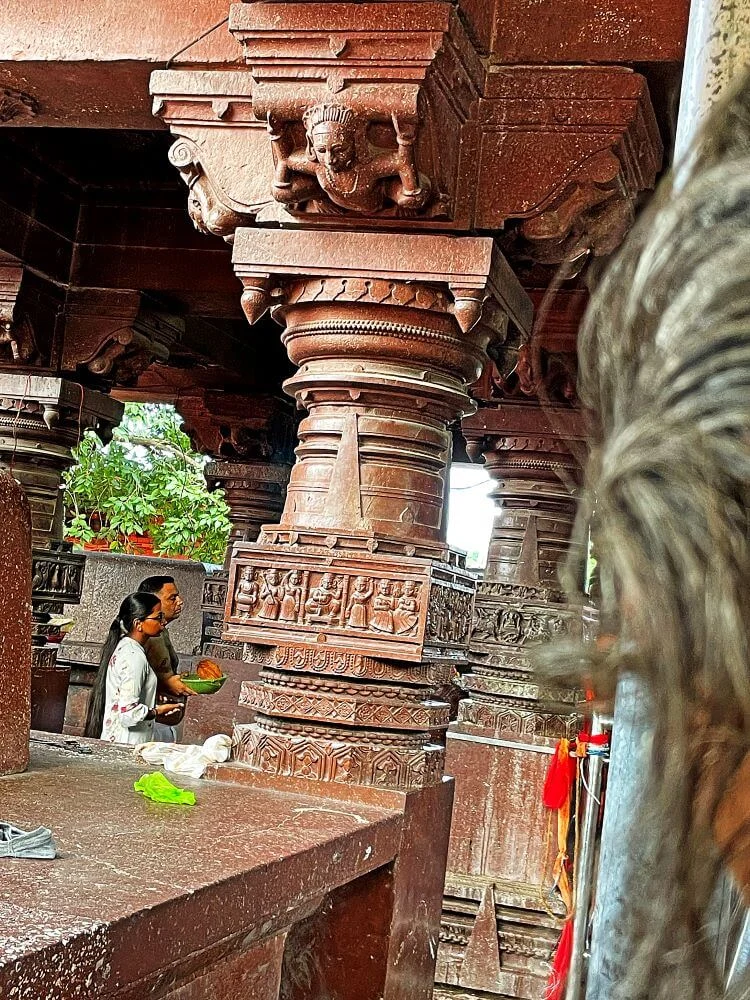
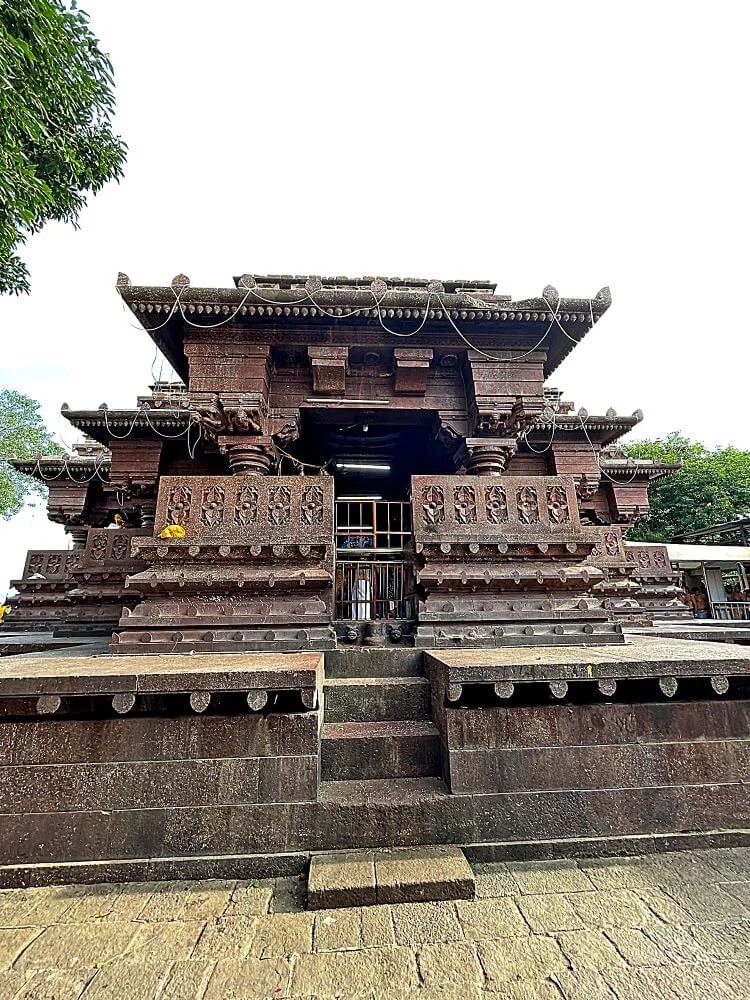
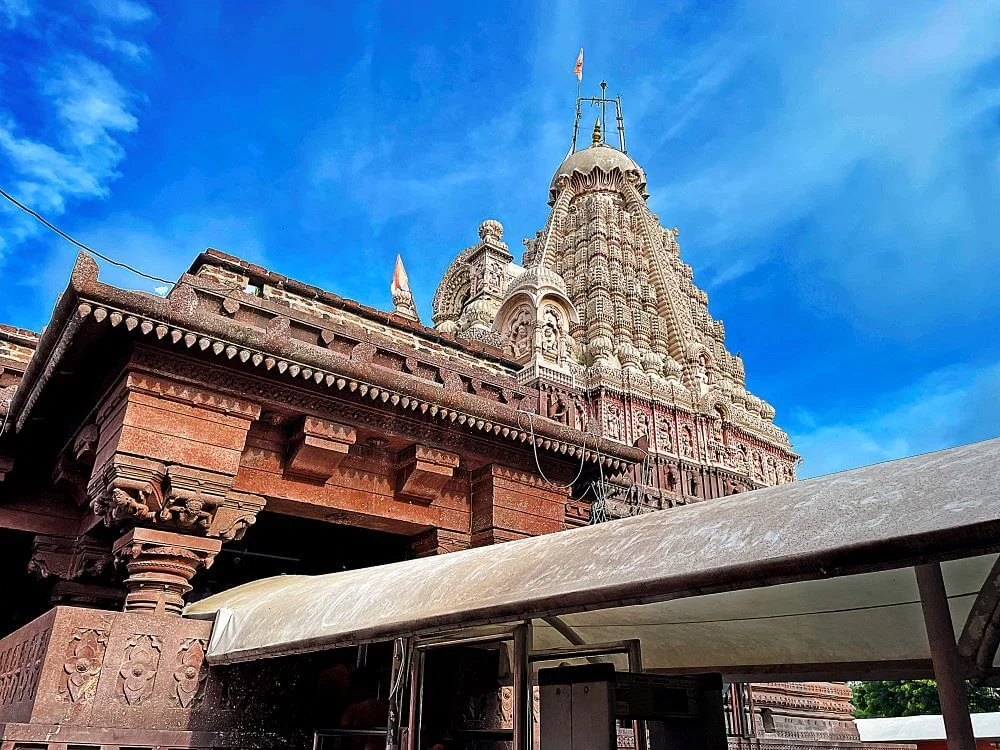
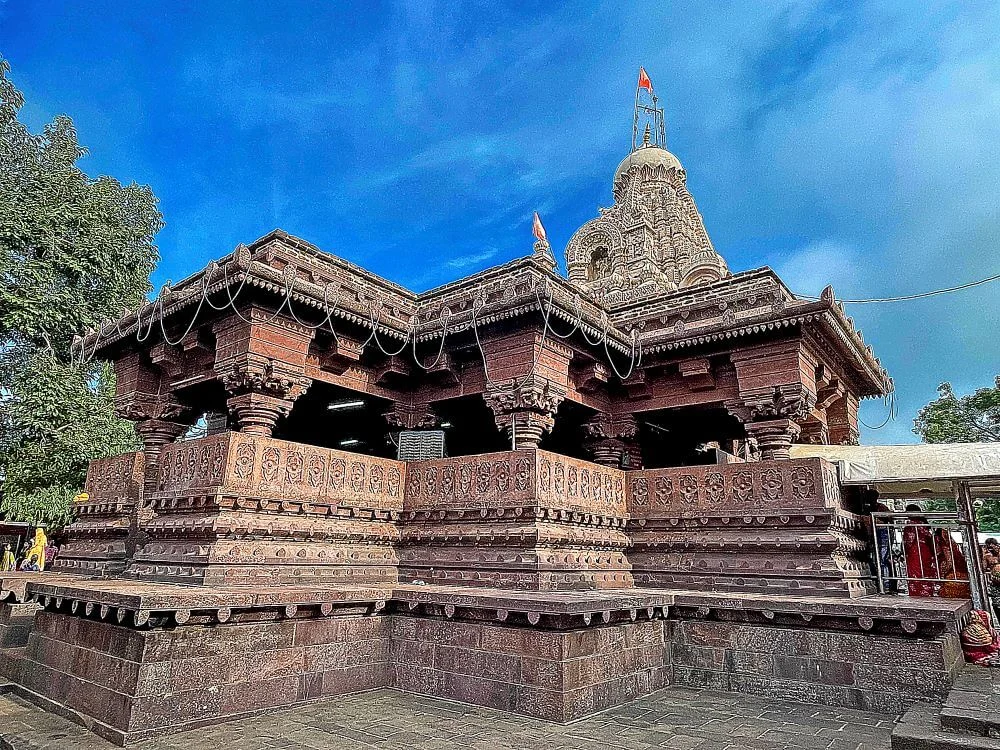
The temple’s golden spire gleams above a 12-foot-high stone wall enclosing the complex. Built from red sandstone in the Deccan-Dravidian style, its spire showcases intricate deity carvings and Nandi motifs. The Sabhamandap (main hall) is held by 24 sculpted pillars depicting mythological scenes, with a monolithic Nandi at the centre. Five steps lead down to the sanctum (garbhagriha), whose elaborate doorframe features vines, flowers, animals, and human figures. The black stone Shivalinga, facing east, is enclosed by a railing and crowned with a brass cobra during special occasions.
Adjacent to the temple lies the Shivalaya Tirth, an ornate stepped tank surrounded by eight shrines symbolizing holy tirthas invited here by Lord Brahma.
Daily rites begin at dawn with abhishek, chanting, and mantra recitations. Male puja participants must follow a bare-chested dhoti or sovale dress code, while women have no restrictions. Special events on Mahashivratri, Shravan Mondays, and festive days attract thousands. Devotees can book Panchamrit, Rudrabhishek, and Brahmabhojan offerings through the temple office. Timings are 5 a.m. to 8 p.m., extended on festival days
This Website is developed by

Aseemit Services & Solutions
Contact : +91 7219259149
Nearby Facilities for Visitors
-
Bus Stop :
Khuldabad -
Railway Station :
Sambhajinagar -
Airport :
Sambhajinagar
-
Mechanic :
Verul -
Petrol Pump :
Verul -
Medical Help :
Verul