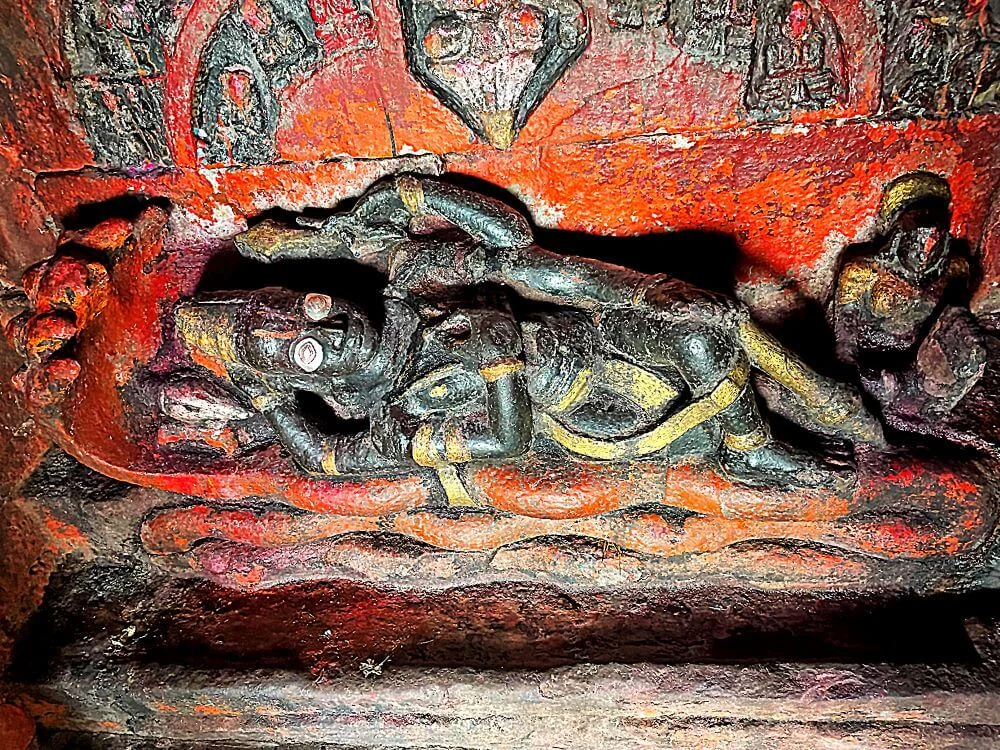
Vishnu Temple, Manikgad
Hemadpanti Temple and Medieval Deccan Architecture — Jivati, Chandrapur
Find here
How to
Reach
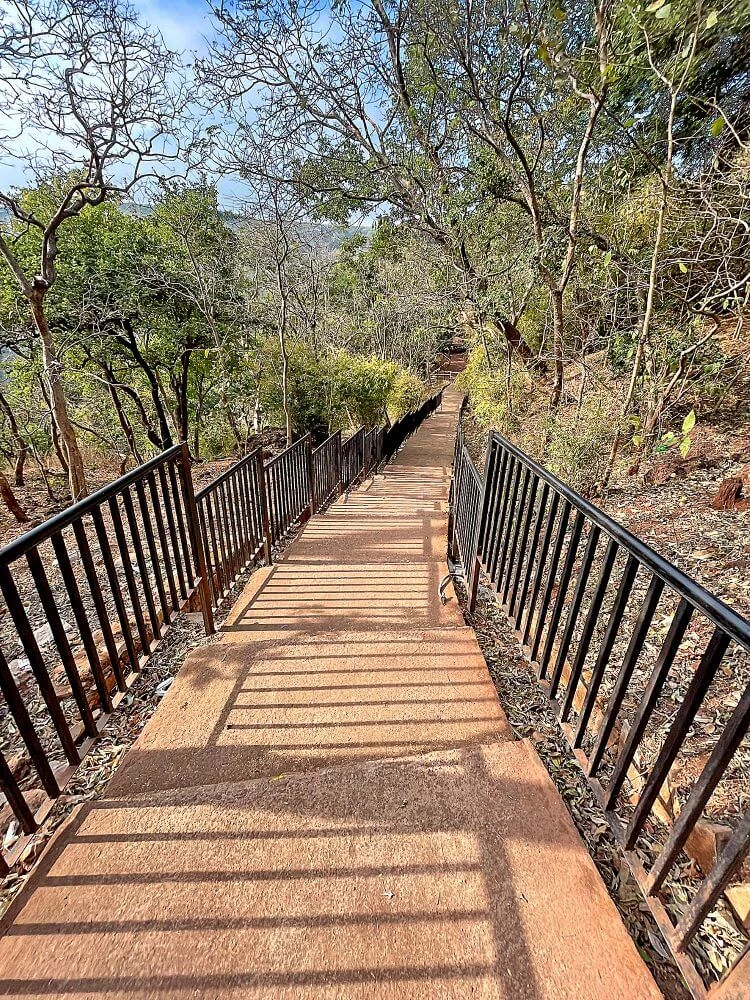
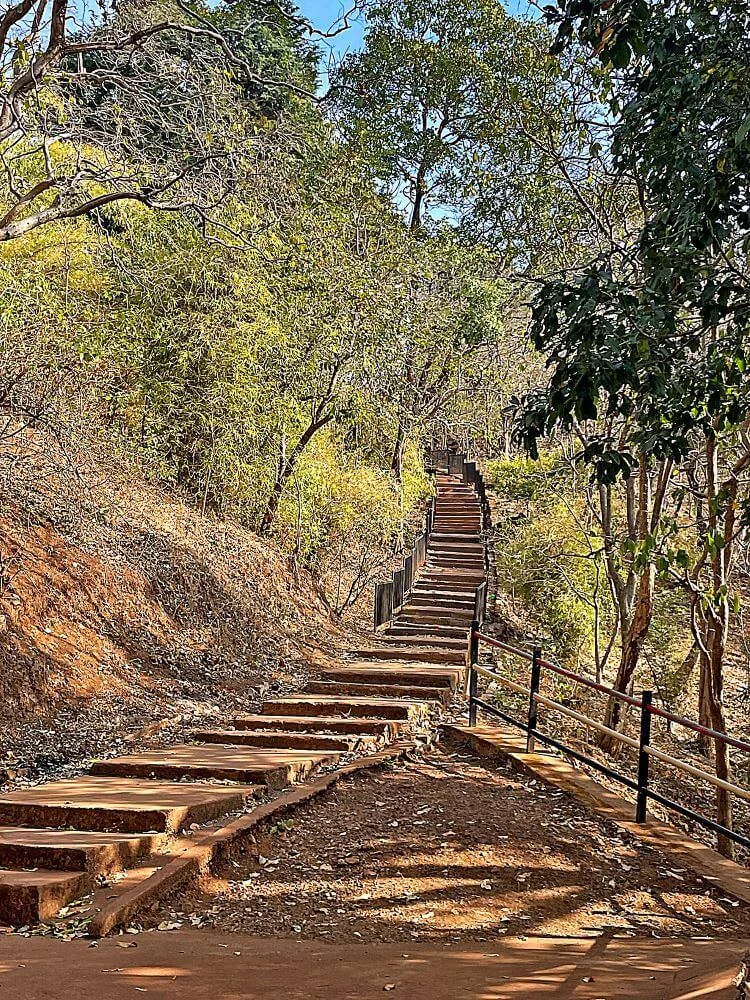
Manikgad is accessible from Rajura (35 km) and Chandrapur (95 km) by private vehicles or hired jeeps. The route includes forested terrain and hill roads, adding to the adventure. A short hike throgh forest is required from the main road
Best Time to
Visit
October to February – ideal for temple visits and trekking in pleasant weather. The monsoon months (July–September) add lush beauty but may make routes slippery
How Much Time Do You Need?
About Vishnu Temple, Manikgad
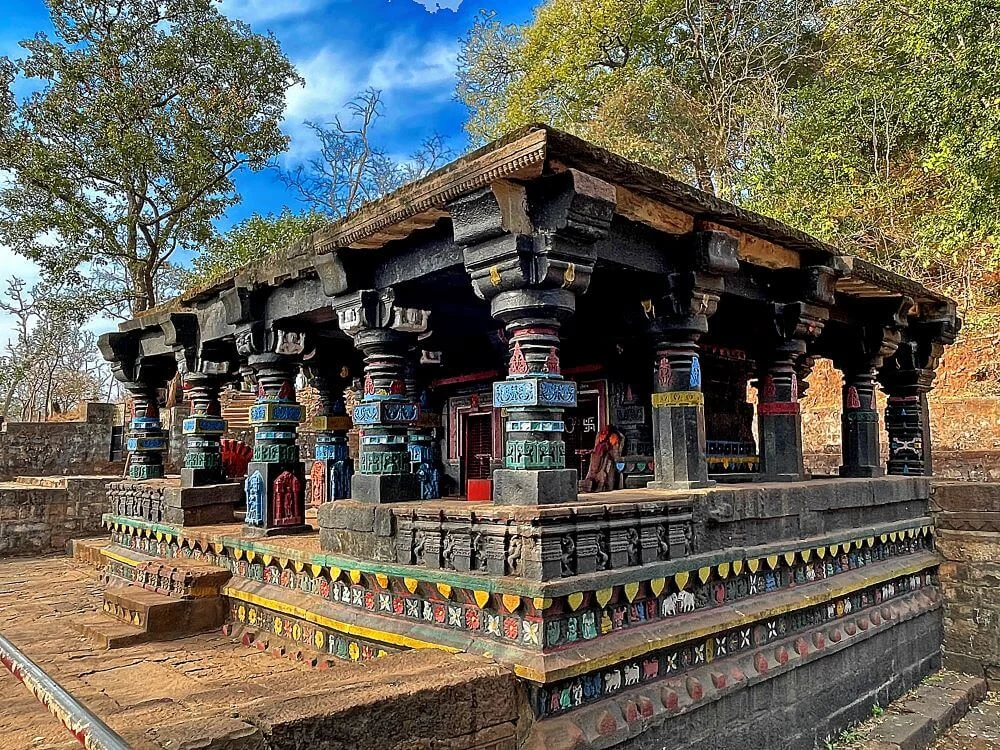
Hidden deep within the forested hills of Jiwati Taluka in Chandrapur District, the Vishnu Temple at Manikgad stands as a glorious reminder of the region’s medieval heritage. This ancient temple, believed to date back to the 12th–13th century, is one of the finest examples of Hemadpanti-style architecture in southern Maharashtra. Situated within the ruins of the historic Manikgad Fort, the temple attracts devotees, history enthusiasts, and trekkers alike for its intricate carvings, rich mythological depictions, and serene natural surroundings.
The Vishnu Temple is located at the heart of Manikgad village, which lies about 35 km from Rajura and 95 km from Chandrapur city. The temple, built entirely of basalt stone, follows a typical medieval layout comprising a garbhagriha (sanctum), antaral (vestibule), and mandapa (assembly hall). Each section showcases extraordinary craftsmanship, with finely sculpted pillars, lintels, and ornamental motifs. The outer walls of the temple are adorned with exquisite carvings of Lord Vishnu in various avatars—Varaha, Vamana, and Narasimha—along with celestial beings, apsaras, and musicians. These intricate details reflect the spiritual devotion and advanced artistry of the era.
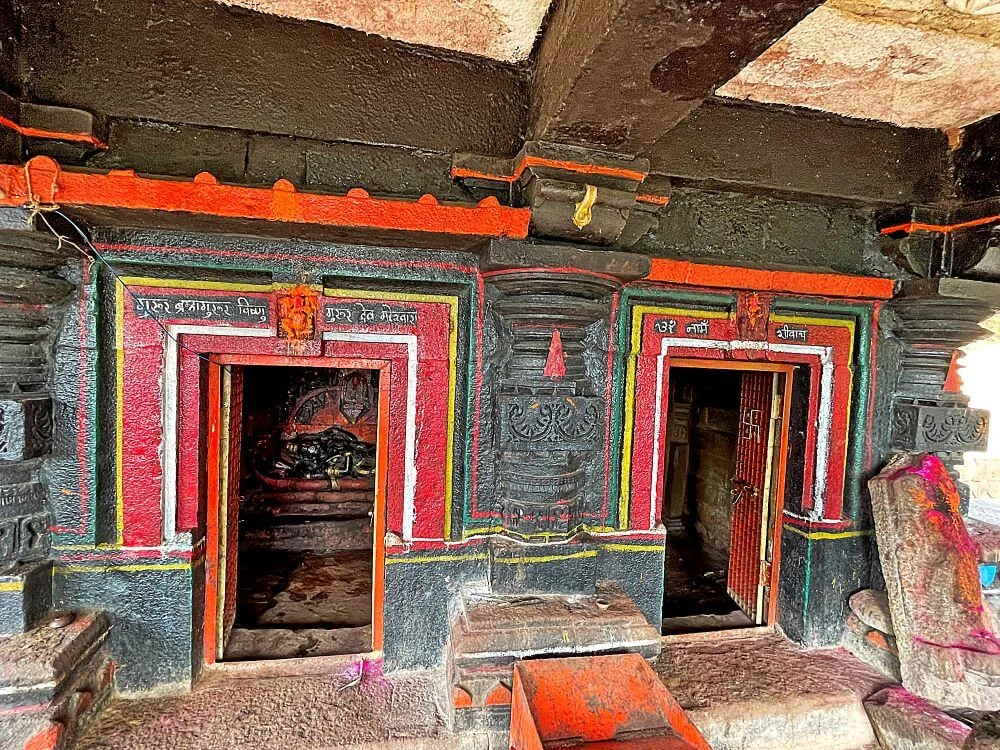
Inside the sanctum lies the black stone idol of Lord Vishnu, seated majestically on Adisesha (the divine serpent). The temple’s sanctity is further enhanced by the presence of subsidiary shrines dedicated to Lord Hanuman, Garuda, and Goddess Lakshmi, emphasizing the deep Vaishnavite traditions that flourished in this region. Despite the passage of time and exposure to natural forces, the temple’s stone structure remains remarkably stable, a testament to the engineering brilliance of ancient builders.
Manikgad itself has historical significance—it was once a thriving stronghold during the Yadava and Gond dynasties. The fort’s remnants, including bastions, water tanks, and gateways, surround the temple complex, making it a fascinating destination for those interested in history, architecture, and archaeology. From the temple courtyard, visitors can enjoy a panoramic view of the dense forests and rolling hills that define Jiwati’s landscape. During monsoon and winter, the surroundings come alive with lush greenery and mist, creating a truly divine atmosphere.
Locals believe that the Vishnu Temple of Manikgad continues to radiate spiritual energy, and several rituals are still performed here during Vaikuntha Ekadashi and Kartik Purnima. Villagers and devotees from nearby areas gather to offer prayers, light lamps, and sing bhajans in devotion to Lord Vishnu
This Website is developed by

Aseemit Services & Solutions
Contact : +91 7219259149
Nearby Facilities for Visitors
-
Bus Stop :
Jiwati or Rajura -
Railway Station :
Rajura -
Airport :
Nagpur
-
Mechanic :
Rajura -
Petrol Pump :
Rajura -
Medical Help :
Rajura