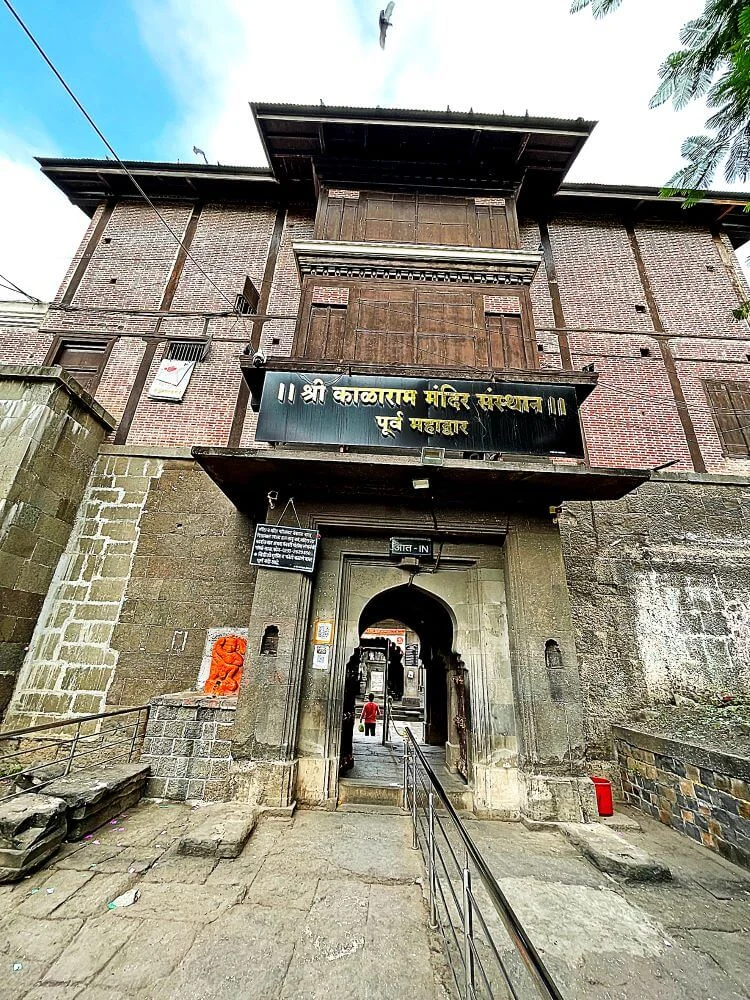
Kalaram Temple, Panchvati Nashik
Historic Ram Temple in Panchavati
Find here
How to
Reach
The temple lies within Panchvati, easily accessible by car, rickshaw, and public transport from any part of Nashik. The roads are fully motorable
Best Time to
Visit
The best months to visit are October to March, when weather is pleasant. Also to experience festivities and local traditions and culture, visiting during Ram Navami or Kartik Purnima is must
How Much Time Do You Need?
About Kalaram Temple, Panchvati Nashik
In the sacred town of Panchvati in Nashik — a land sanctified by the presence of Lord Ram, Sita, and Lakshman during their exile — stands the revered Kalaram Mandir, one of Maharashtra’s most spiritually significant temples. Panchvati derives its name from the five banyan trees that grew in this area, and it is believed to be the exact spot where Lord Ram resided for two years, making it a cornerstone of Ramayana geography.
According to legend, during the exile, Shurpanakha, the sister of Ravana, tried to approach Lord Ram, but Lakshman intervened and severed her nose and ears. Enraged, Ravana sent 14,000 demons to attack, whom Lord Ram annihilated, manifesting his fierce cosmic form — the Kala Swaroop. Hence, the temple derives its name “Kalaram”, meaning “Black Ram.”
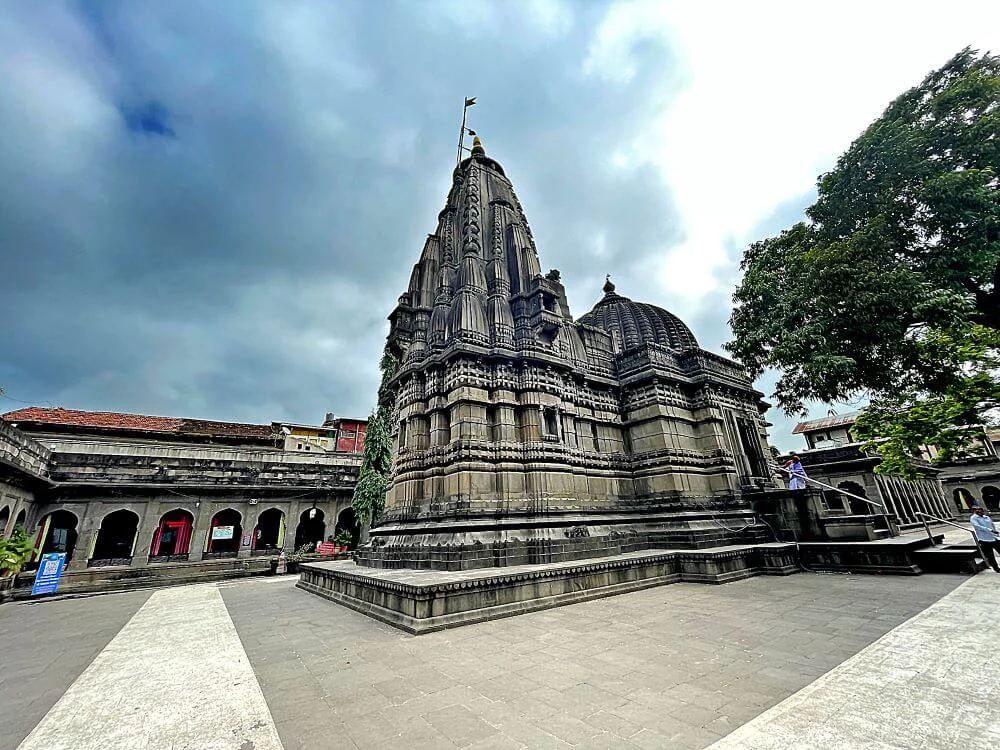
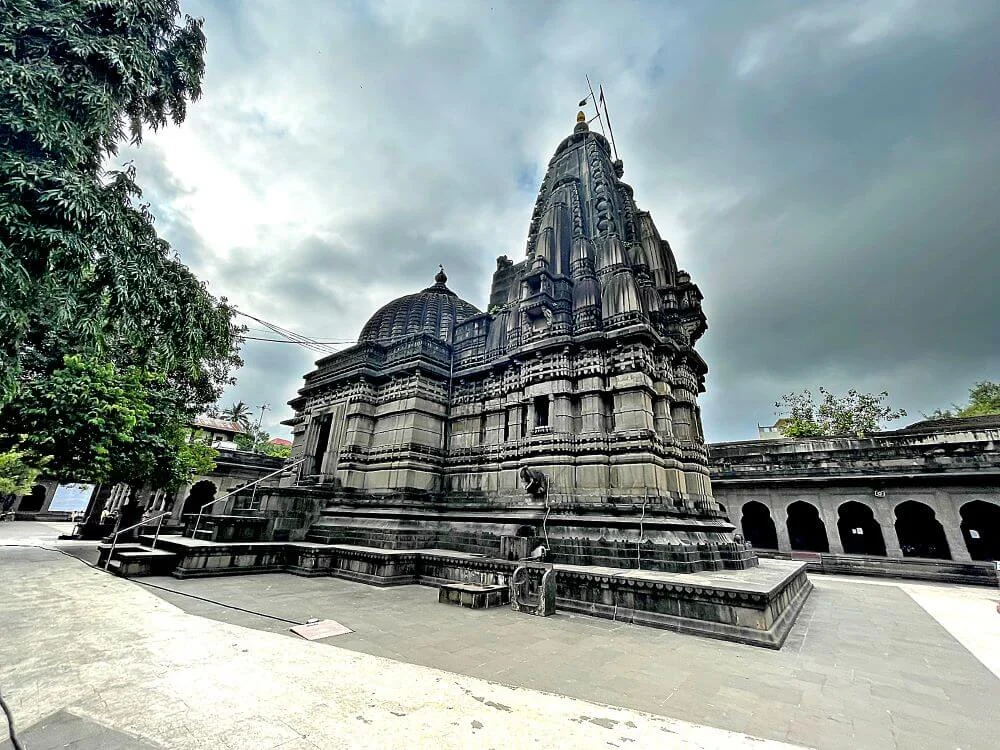
The original shrine was a wooden structure frequently visited by saints such as Chakradhar Swami, Sant Eknath Maharaj, and Samarth Ramdas. In the 18th century, Sardar Rangrao Odhekar, under the patronage of Gopikabai Peshwe, undertook the monumental task of rebuilding it between 1778 CE and 1790 CE. Constructed in the Nagara architectural style using black stone from Ramsej Hill, the temple’s design took 2,000 artisans over 12 years to complete at a cost of ₹23 lakhs — a vast sum for its time.
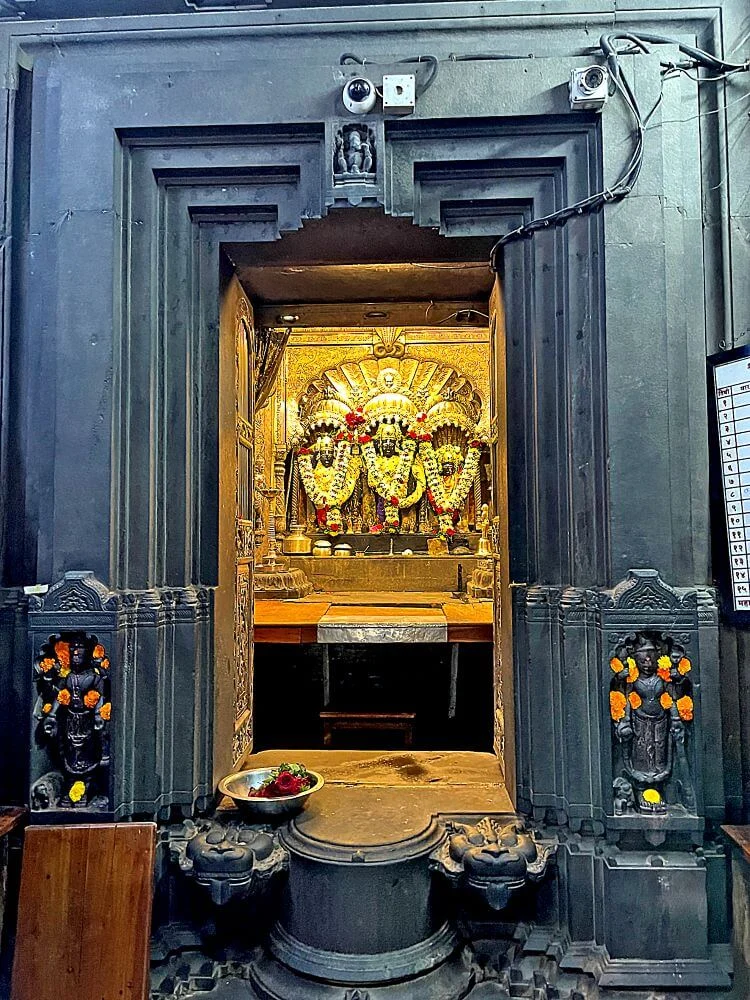
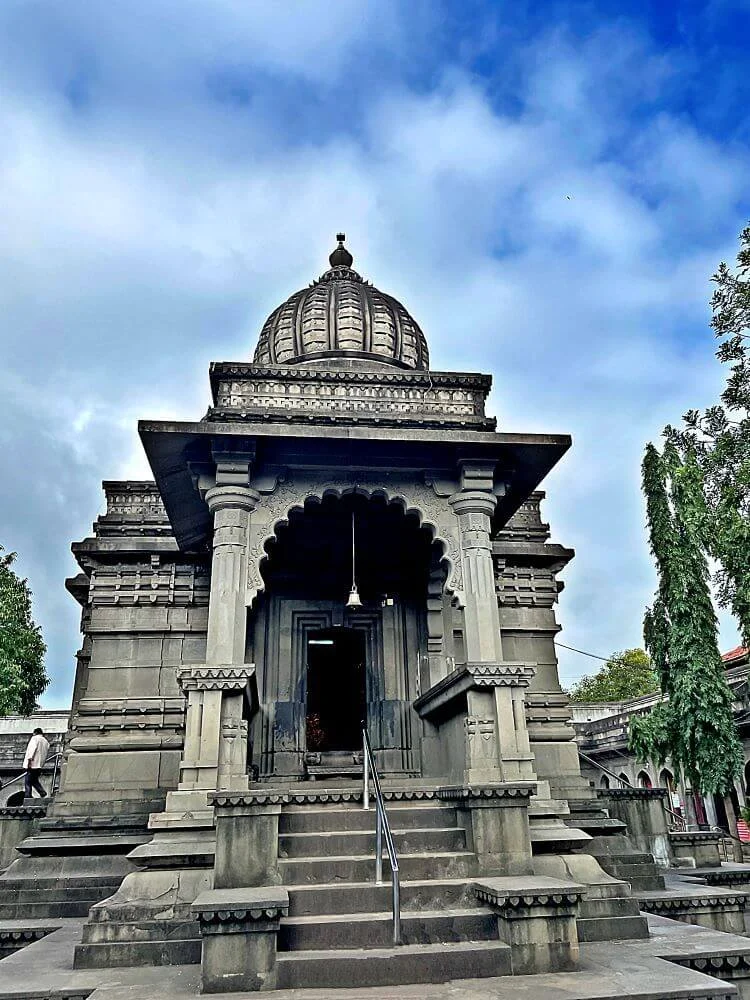
The grand complex spans 245 ft × 145 ft, with a majestic 69-ft tall gold-plated spire that dominates Panchvati’s skyline. The temple’s layout bears resemblance to the Trimbakeshwar Jyotirling Temple. The eastern gateway opens into a vast courtyard leading to the richly adorned sanctum. Here, three divine idols — Lord Ram, Goddess Sita, and Shri Lakshman — stand gracefully, carved in black stone, each about two feet tall, radiating an aura of purity and devotion.
Scriptural tradition holds that these idols were self-manifested and discovered at sacred points along the Godavari River — Ram’s idol at Ramkund, Lakshman’s at Lakshmankund, and Sita’s at Sitakund. Devotees believe their placement symbolizes divine destiny revealing itself through nature’s grace.
The Kalaram Temple serves not only as a center of bhakti but also as a symbol of historical and social significance. On 2 March 1930, Dr. B. R. Ambedkar led a landmark temple-entry satyagraha here, demanding equal access for all castes — a defining moment in India’s social reform movement.
Festivals at the temple attract thousands year-round. The Ram Janmotsav is celebrated from Gudi Padwa to Dwadasi, featuring ritual baths, processions, and devotional music. Other popular festivals include Rath Yatra, Narasimha Jayanti, Krishna Janmashtami, Ganeshotsav, and the grand illumination on Kartik Purnima when the entire complex glows under a canopy of lamps.
Renowned for its heritage, sacredness, and architectural brilliance, the Kalaram Mandir stands as a timeless shrine representing Nashik’s devotion, history, and reformist spirit
This Website is developed by

Aseemit Services & Solutions
Contact : +91 7219259149
Nearby Facilities for Visitors
-
Bus Stop :
Nashik -
Railway Station :
Nashik Rd -
Airport :
Nashik
-
Mechanic :
Nashik -
Petrol Pump :
Nashik -
Medical Help :
Nashik