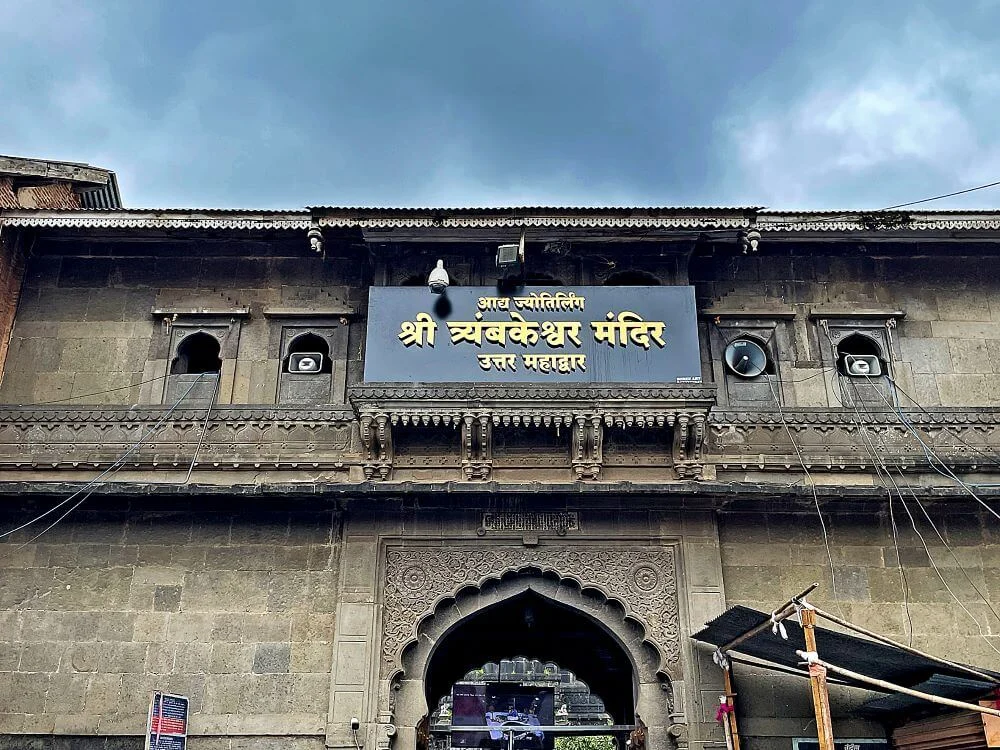
Trimbakeshwar Jyotirling Temple, Nashik
Jyotirlinga Temple at the Source of the Sacred River Godavari
Find here
How to
Reach
Accessible by a motorable road up to the main temple parking
Best Time to
Visit
The best months to visit are October to March, when weather is pleasant and during Maha Shivratri or Kumbh Mela
How Much Time Do You Need?
About Trimbakeshwar Jyotirling Temple, Nashik
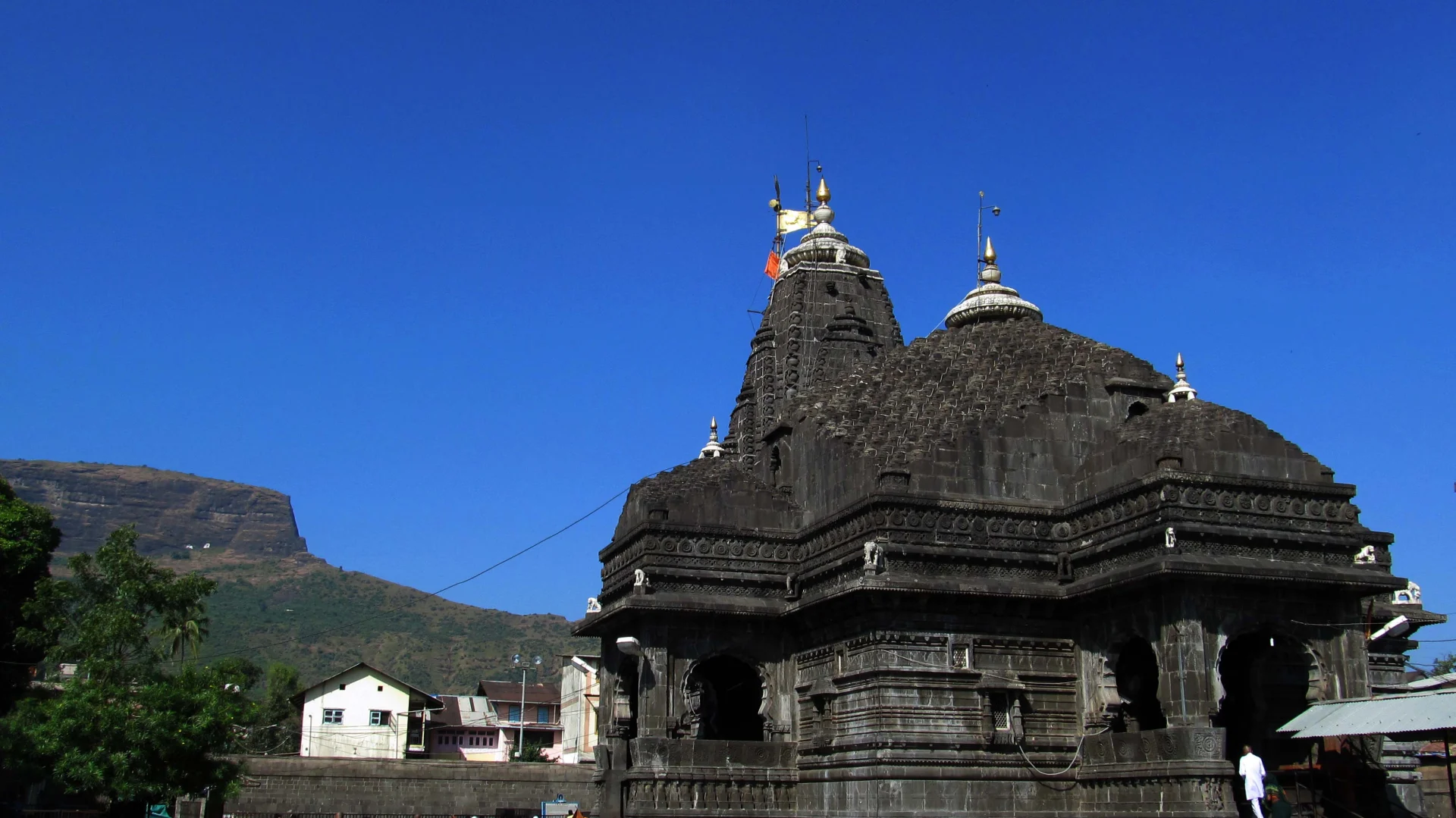
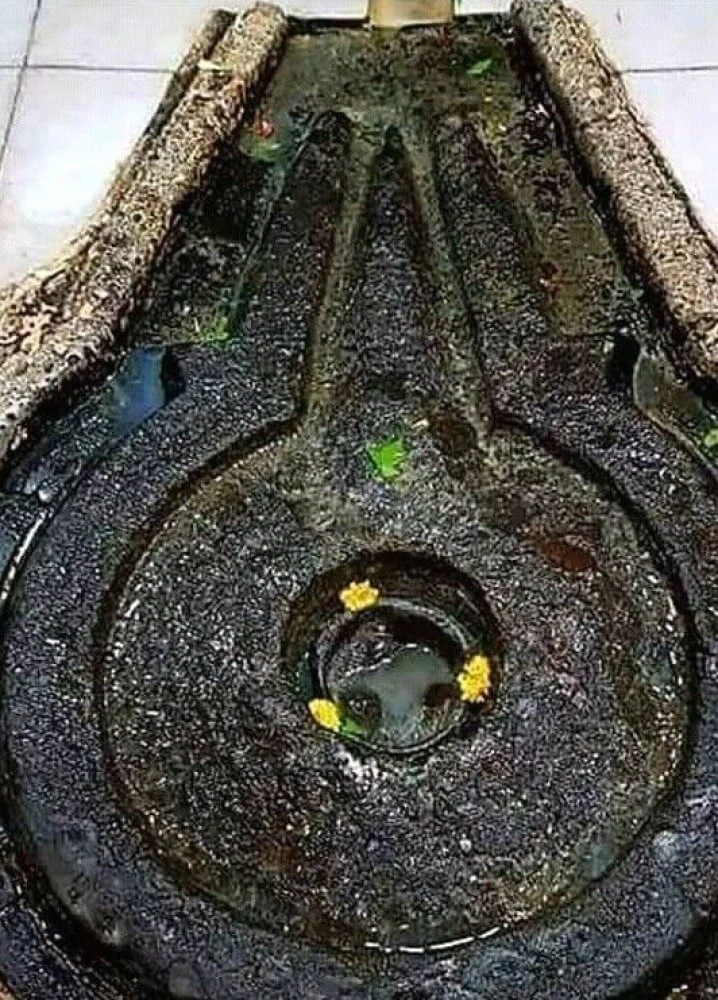
Nestled at the foot of the sacred Brahmagiri Hill, on the banks of the holy Godavari River, the Trimbakeshwar Jyotirling Temple in Nashik is among the most revered shrines of Lord Shiva and one of the twelve Jyotirlingas in India. Maharashtra is uniquely blessed with three Jyotirlinga temples — Bhimashankar, Grishneshwar, and Trimbakeshwar — each representing a manifestation of Shiva’s divine energy. The Trimbakeshwar temple stands apart because its Linga represents the Trimurti — Brahma, Vishnu, and Mahesh, symbolizing creation, preservation, and destruction in a single form.
According to ancient legend, when the celestial Ganga was released from Lord Shiva’s locks, Goddess Parvati grew jealous of their closeness. She instructed Lord Ganesha to find a way to remove Ganga from Shiva’s head. Assuming the form of a cow, Ganesha grazed near the ashram of Sage Gautama on Brahmagiri Hill, ultimately causing the sage to unwittingly commit the sin of killing a cow. To absolve himself, Gautama prayed to Shiva, who, moved by his devotion, released the sacred Ganga here — making this the birthplace of the Godavari River. From that moment, Shiva manifested as Trimbakeshwar Jyotirlinga, sanctifying this land forever.
Another story tells of a dispute between Brahma and Shiva, where Shiva cursed Brahma to be cast to earth as a mountain, now known as Brahmagiri. Residing forever at its base, Shiva became Trimbakeshwar Mahadev, the eternal divine presence.
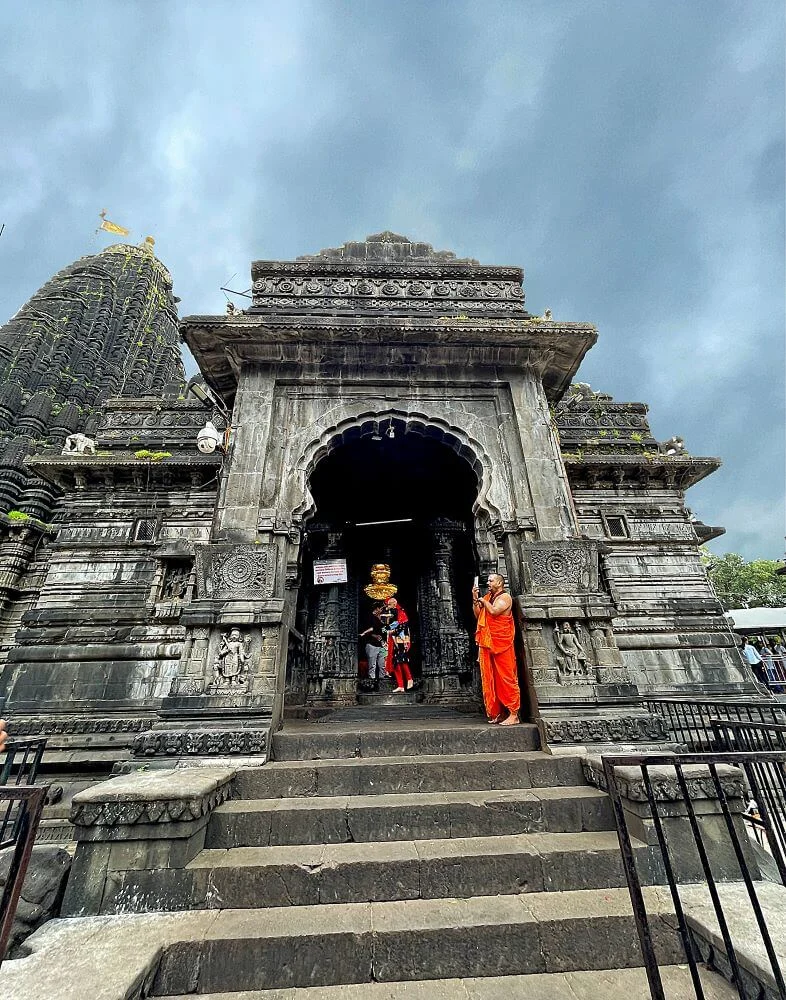
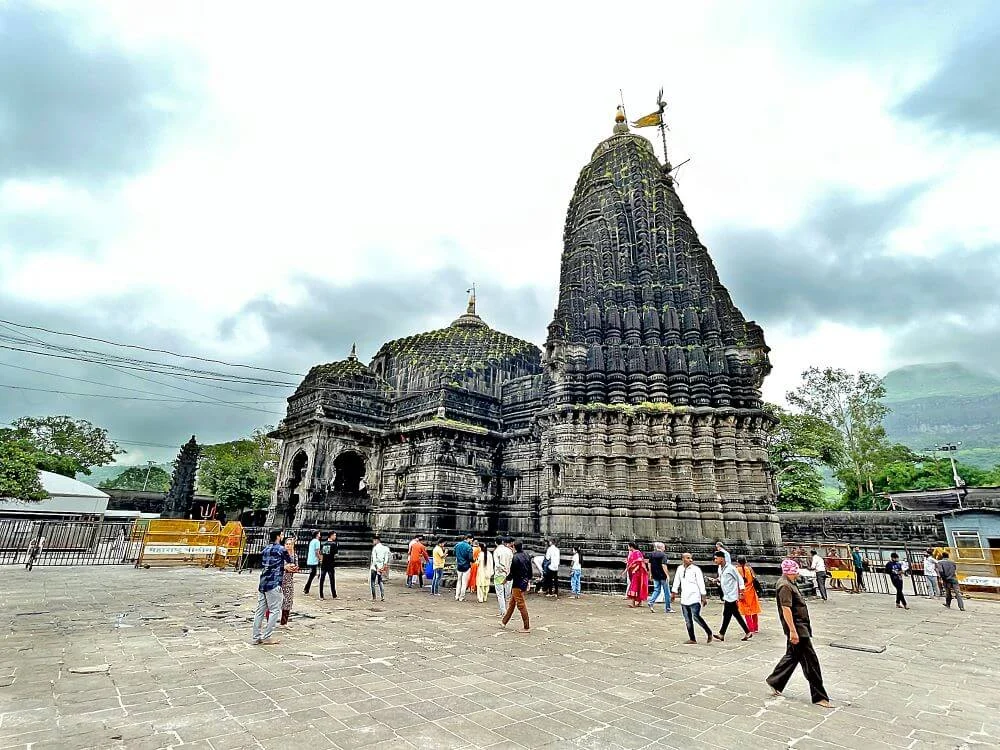
The temple, built from black basalt stone in the Hemadpanti style, combines architectural grace with spiritual power. The magnificent golden spire (kalash), trident, and five‑metal flag glisten above the tower. Its walls are carved with deities, celestial beings, and intricate motifs symbolizing divine energy. Originally constructed in the 10th century by King Jhanj of the Shilahara dynasty, it was later restored by Nana Saheb Peshwa in the 18th century. The reconstruction took 31 years and involved over 700 artisans. The detailed stonework, marble from Makrana in Rajasthan, and golden embellishments testify to centuries of devotional craftsmanship.
Inside, a majestic Nandi faces the sanctum, while a beautifully carved marble turtle symbolizes patience and purity. Descending into the sanctum, devotees behold the self-manifested Jyotirlinga, where three Lingas represent Brahma, Vishnu, and Shiva together. A continuous stream of sacred water flows from the Linga, representing the eternal Ganga. Adjacent stands a marble idol of Goddess Parvati, completing the divine triad.
The complex, measuring 265 ft by 218 ft, has four entrances aligned to the cardinal directions. The Amrit Kund, between the south and west gates, mirrors the temple’s height and provides water for rituals. The jeweled crown of the deity, brought by the Peshwas after their victory in Mysore, is displayed every Monday during ceremonial processions to the Kushavarta Tirth — the origin point of the Godavari River.
Rituals such as Brahma Puja (7–8:30 a.m.), Shiva Puja (10:45 a.m.–12:30 p.m.), and Vishnu Puja (7–8:30 p.m.) occur daily. Major celebrations include Maha Shivratri, Nag Panchami, Ganesh Chaturthi, and the Simhastha Kumbh Mela, one of the world’s largest religious gatherings, held here every 12 years. The Trimbakeshwar Temple Trust manages pilgrim facilities, including accommodation, dining, and online puja bookings, ensuring a comfortable and spiritually fulfilling experience for visitors
This Website is developed by

Aseemit Services & Solutions
Contact : +91 7219259149
Nearby Facilities for Visitors
-
Bus Stop :
Trimbakeshwar -
Railway Station :
Nashik Rd -
Airport :
Nashik
-
Mechanic :
Trimbakeshwar -
Petrol Pump :
Trimbakeshwar -
Medical Help :
Trimbakeshwar